






















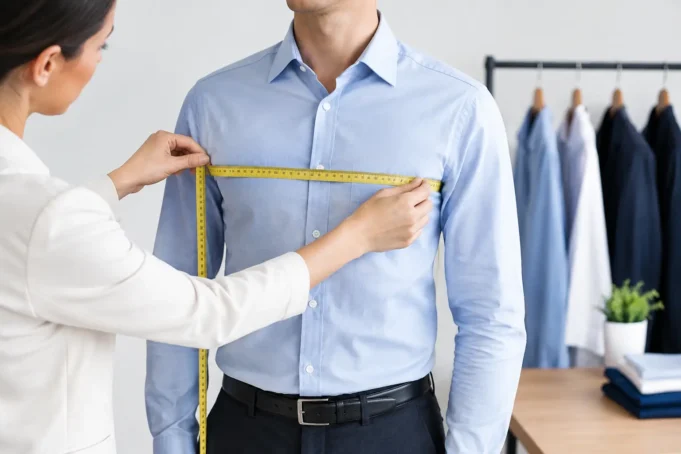
A uniform program can look polished in a sample presentation and still fail at rollout if staff receive garments that pinch, pull, hang too loosely, or restrict movement. Knowing how to measure uniform sizes turns sizing from a last-minute administrative task into a practical part of procurement, helping buyers protect comfort, brand presentation, and reorder costs.
For hospitality teams, clinics, schools, retail chains, factories, and corporate offices, the goal is not simply to collect a shirt size. It is to give a uniform supplier reliable measurements, a clear size breakdown, and enough context to recommend the right fit for the job.
Start With the Supplier’s Size Chart
Do not assume that a medium is the same across every manufacturer. A medium polo from one supplier may have a much different chest width, body length, or shoulder measurement than a medium corporate shirt from another. Imported ready-stock garments, locally produced pieces, and custom made uniform programs can all follow different grading rules.
Ask the supplier for the exact size chart for the style being ordered. It should show garment measurements in inches or centimeters and state whether each figure is a body measurement or a finished garment measurement. This distinction matters. A 40-inch chest measurement on a size chart may refer to the garment itself, not the wearer’s chest.
For a custom made uniform order, confirm the following before collecting staff data: the garment category, fit type, fabric stretch, intended gender or unisex cut, and whether the supplier uses finished-garment or body measurements. A slim-fit woven shirt and a relaxed-fit knit polo should not be measured or allocated in the same way.
How to Measure Uniform Sizes Correctly
Use a flexible tailor’s tape measure, not a metal construction tape. Staff should stand naturally, wear light clothing similar to what they would wear under the uniform, and avoid pulling the tape excessively tight. Measurements should be snug enough to be accurate but never restrictive.
For large organizations, appoint a small number of trained measurers rather than asking every employee to self-measure. Self-reported sizing is quick, but it often creates inconsistencies, particularly when employees use old clothing labels as their reference point.
Chest or Bust
Measure around the fullest part of the chest or bust, keeping the tape level across the back. The wearer should breathe normally with their arms relaxed. This is usually the primary measurement for polos, T-shirts, jackets, blouses, coveralls, and many work shirts.
If the supplier’s chart lists half-chest or pit-to-pit measurements, explain this to your team. Half-chest is measured flat across the garment from one underarm point to the other, then doubled. It is not a direct body measurement.
Waist and Hip
For trousers, skirts, fitted tunics, and uniforms with shaped waists, measure the natural waist where the wearer normally sits comfortably. Do not rely on the waist size printed on casual jeans, since modern denim sizing varies widely.
Measure hips around the fullest area, generally about seven to nine inches below the waist. Hip measurement is especially relevant for women’s pants, skirts, medical uniforms, and fitted front-of-house apparel. When chest and hip measurements point to different sizes, select the size that accommodates the larger area, then discuss alterations or a different cut with the supplier.
Shoulder, Sleeve, and Length
Shoulder width is measured from one shoulder point to the other across the upper back. It can be useful for structured shirts, blazers, chef jackets, and security uniforms, where poor shoulder fit quickly affects appearance and mobility.
For sleeve length, measure from the shoulder point to the desired cuff position with the arm relaxed. For pants, measure the inseam from the crotch seam to the preferred hem point. If staff wear safety boots, heels, or specific work footwear, account for that when deciding trouser length.
Garment length deserves attention in active roles. A shirt that is too short may come untucked during warehouse work or food-service duties. A lab coat that is too long can create a safety issue. Include the work environment when confirming the final length.
Add Ease for Movement and the Job
Body measurements are only the starting point. A uniform needs additional room, known as ease, so employees can sit, bend, reach, walk, and work comfortably. The correct amount depends on fabric, garment design, and role requirements.
A stretch polyester-spandex polo can fit closer to the body than a non-stretch cotton work shirt. A warehouse jacket needs more room than a reception blouse because it may be worn over layers and used during lifting. Healthcare uniforms need practical mobility, while premium hospitality uniforms may prioritize a cleaner silhouette but still need enough allowance for long shifts.
This is why buyers should avoid simply adding a fixed number of inches to every measurement. Follow the supplier’s style-specific recommendation and request a physical sample when the order is substantial. A sample fitting reveals issues that a chart cannot: sleeve opening comfort, collar placement, pocket access, opacity, shrinkage risk, and how the garment performs in motion.
Build a Sizing Sheet Suppliers Can Use
A good sizing sheet reduces back-and-forth, prevents transcription errors, and gives production teams a usable record. For standard-size programs, list each employee name or staff ID, department, garment style, selected size, quantity, and any approved fit note.
For made-to-measure programs, record the actual body measurements requested by the manufacturer, along with the date measured and the person who took the measurements. This is particularly useful for executive uniforms, tailored blazers, formal servicewear, and teams with nonstandard fit needs.
Avoid sharing more personal information than the supplier needs. Employee names can be replaced by IDs where appropriate, especially for large corporate, healthcare, or public-sector orders. The production team needs accurate sizing data, not unnecessary personal records.
Before submitting the order, check the size curve. If an organization with 200 staff has an unusually high number of XS or 4XL selections, verify the entries. It may be completely valid, but it may also indicate that staff selected familiar retail sizes instead of using the supplier’s chart.
Run a Fit Session Before Full Production
For orders with multiple styles, departments, or locations, a fit session is one of the most cost-effective quality-control steps available. Request a fitting kit or sample set that includes the likely sizes and actual production fabrics where possible.
Have representative wearers try on samples while performing simple job movements: reaching forward, sitting, bending, carrying a light item, and raising both arms. Ask direct questions. Does the shirt pull at the buttons? Does the waistband roll when seated? Does the collar feel too close? Can the wearer access tools, keys, or an ID card?
Document the preferred size after fitting, rather than relying on memory. If a staff member is between sizes, the decision depends on the garment. For a formal woven shirt, sizing up may avoid pulling across the chest. For a loose polo, sizing down may produce a more professional silhouette. The supplier can advise, but only if they understand the use case and see accurate measurements.
Account for Fabric Behavior and Production Tolerances
Uniform sizing is not exact to the millimeter. Most suppliers apply an acceptable production tolerance, meaning a finished garment can vary slightly from the stated measurement. Ask what tolerance applies, especially for branded programs where consistency matters across branches or repeat orders.
Fabric behavior also affects fit over time. Cotton-rich garments can shrink if laundering instructions are ignored. Some performance fabrics relax after wear. Dark colors, heavy embroidery, heat transfers, and reflective applications may change how a garment drapes or feels, though they do not usually change the base size.
For industrial laundering, hospitality turnover, or healthcare settings, ask the manufacturer how repeated washing affects shrinkage, color retention, and dimensional stability. The lowest unit price can become expensive if garments change shape after several wash cycles.
Plan for Reorders, New Hires, and Size Changes
The first uniform order should create a system that makes future purchasing easier. Keep the approved size chart, fit notes, garment specifications, fabric details, decoration placement, and supplier confirmation in one procurement file. This helps new hires receive matching uniforms and prevents accidental style substitutions later.
For ongoing programs, hold a modest buffer of the most common sizes when storage and budget allow. It is usually more efficient than placing repeated small orders, particularly when uniforms include custom embroidery, screen printing, or branded trims. For less common sizes, establish lead times with the supplier so HR and operations teams can set realistic expectations.
A well-measured uniform does more than reduce exchanges. It supports staff confidence, safer movement, and a consistent customer-facing image. Treat sizing as part of your uniform specification, not an afterthought, and suppliers can deliver a program that looks considered from the fitting room to the workplace.