























A missed delivery date can leave a hotel opening with incomplete staff uniforms, a clinic without the right scrub sizes, or a retail chain with inconsistent branding across locations. That is why apparel automation trends matter to uniform buyers: they are changing how suppliers quote, sample, cut, decorate, inspect, and replenish custom made uniforms.
For procurement teams, automation is not simply a factory story. It affects lead times, minimum order quantities, artwork approvals, size accuracy, repeat-order consistency, and the visibility buyers have over production. The useful question is not whether a supplier uses automation. It is where automation sits in its workflow, and whether it solves the production risks relevant to the order.
Apparel Automation Trends Changing Uniform Production
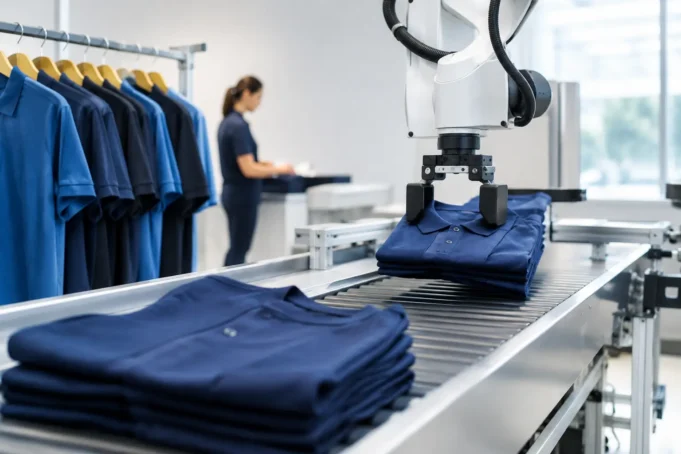
The strongest shift is the connection of formerly separate steps. A uniform order may begin with a digital design file, move into a 3D sample review, feed a marker-making and cutting system, and then carry production data through printing, embroidery, quality control, packing, and delivery. This reduces manual re-entry of information, which is a frequent cause of wrong logo placements, incorrect garment colors, and mismatched size breakdowns.
For buyers managing multiple departments or branches, this connected workflow can make approved uniform specifications easier to protect. A hospitality group, for example, can retain approved polo colors, thread references, placement measurements, and fabric selections for future top-up orders. The result is not merely faster ordering. It is stronger control over the brand standard after the first rollout.
Automation does have limits. Garment construction still relies heavily on skilled sewing operators, especially for structured workwear, complex collars, multi-pocket utility garments, reflective safety details, and small runs with frequent style changes. Suppliers that promise fully automated manufacturing should be assessed carefully. In most uniform operations, the practical value comes from automating repetitive, data-heavy, or precision-sensitive tasks while keeping experienced people responsible for fit, finishing, and exceptions.
Digital Product Development Reduces Sampling Cycles
Traditional sampling can involve multiple rounds of sketches, paper patterns, physical samples, courier deliveries, and approval comments. Digital product development tools shorten that loop. They allow suppliers to build technical specifications, develop patterns digitally, grade sizes, and present garment simulations before producing every variation physically.
For a corporate uniform program, digital sampling is particularly useful when stakeholders are in different locations. HR may focus on staff comfort, operations may need pocket access and wash durability, while brand teams review logo visibility and color alignment. A digital review gives these teams a common reference before fabric is cut.
A virtual sample is not a substitute for a wear test. Buyers should still request physical samples for garments where drape, breathability, stretch recovery, opacity, and wash performance are central requirements. This is especially true for healthcare uniforms, food-service attire, industrial workwear, and fitted front-of-house apparel. Digital tools reduce avoidable iterations; they do not eliminate the need to validate performance in real conditions.
Automated Cutting Improves Repeatability and Fabric Control
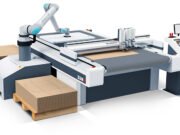
Fabric cutting is one of the most mature forms of apparel automation. Computerized cutting systems use digital patterns and marker plans to cut multiple layers accurately. For uniform manufacturers, this can improve consistency from the first batch to the next and reduce fabric waste through more efficient layout planning.
That matters because fabric is often one of the largest cost components in a uniform order. Better marker efficiency can help suppliers control costs without changing the specified fabric quality. It can also support more disciplined production for color-blocked garments, contrast panels, and standardized size runs.
Buyers should not assume automated cutting automatically means the lowest price. The equipment requires investment and is most efficient when volumes, fabric types, and order scheduling fit the production setup. For very small, highly customized orders, a supplier may use a different cutting method and still deliver excellent results. The more relevant question is whether the supplier can maintain pattern accuracy, size consistency, and reliable replenishment.
Decoration Automation Is Raising Branding Standards
Uniform branding often exposes the weakest part of an order. A well-made shirt can still look inconsistent if embroidery density varies, printed colors shift, or logos are placed differently across batches. Automated decoration workflows are helping suppliers manage these risks.
In embroidery, digitizing software converts artwork into stitch instructions, while multi-head machines can reproduce approved files across larger quantities. Modern workflow systems can also track thread colors, backing materials, hoop settings, and logo positions. This is valuable for organizations with several logo versions, department names, or location-specific identifiers.
Digital textile printing and direct-to-film transfers support another growing need: lower-volume personalization. Names, roles, event graphics, campaign uniforms, and limited team allocations can be produced with less setup than traditional screen printing. These methods are useful when an organization needs variety, but the best decoration method still depends on the garment, artwork, order volume, expected wash cycles, and finish required.
Screen printing remains commercially sensible for larger quantities with stable artwork. Embroidery may better suit premium polos, caps, jackets, and corporate pieces. Transfers can work well for detailed color artwork or individual names. A capable supplier should recommend the method based on end use, not simply push the equipment already available on its floor.
AI Supports Planning, Not Final Judgment
AI is entering apparel operations most visibly through forecasting, order planning, customer service, image analysis, and workflow prioritization. A supplier may use demand data to anticipate common uniform sizes, identify repeat-order patterns, or flag materials that need replenishment before a production bottleneck develops.
For buyers, the near-term benefit is more responsive planning. Organizations with seasonal hiring, annual school enrollment, staff turnover, or branch expansions can share projected demand earlier and work with suppliers on phased production. This reduces the likelihood of emergency orders, expensive express freight, and substitute garments that dilute a uniform program.
AI-generated design concepts can also speed up early discussions, but they should not replace technical development. A concept image may look convincing while ignoring seam construction, mobility, heat exposure, compliance needs, or the behavior of a specific fabric. Human pattern makers, production managers, and wear-test users remain essential to turning an idea into a garment that performs on the job.
Traceability and Quality Data Become Buyer Expectations
As uniform programs become more distributed, buyers increasingly want visibility beyond a purchase order confirmation. Factory data systems, barcode tracking, and RFID-enabled processes can record where an order is in the workflow, from fabric receipt and cutting to packing and dispatch. Not every order needs this level of tracking, but it is becoming more relevant for multi-site programs, regulated industries, and recurring supply contracts.
Quality control is also becoming more data-led. Instead of relying only on final inspection, suppliers can monitor defect patterns by operation, fabric lot, decoration file, or production line. If a recurring issue appears, such as puckering around an embroidered logo or inconsistent sleeve measurements, the team has a better chance of correcting the cause before the full order is affected.
Procurement teams should ask how a supplier handles approved samples, production tolerances, color references, logo files, and inspection records. These operational details often reveal more about reliability than a broad claim about advanced technology.
How Buyers Can Evaluate Automation Capability
A buyer guide for selecting uniform suppliers should treat automation as a capability discussion, not a checklist of machines. Start with the order profile. Is the priority a 5,000-piece rollout, frequent small replenishments, individual personalization, highly technical workwear, or fast event merchandise? Each profile benefits from different technology.
During supplier evaluation, ask how order data moves from quotation to production, how artwork approvals are version-controlled, and how repeat orders are matched to the original specification. Ask whether the supplier can provide digital mockups, physical pre-production samples, size-set samples, or production status updates. For decorated apparel, request examples that have been washed repeatedly, not only freshly completed pieces.
It is also sensible to discuss contingency planning. Automation can improve output, but machines require maintenance, trained operators, stable power, and reliable software processes. A supplier with a clear backup plan may be a safer partner than one with impressive equipment but no plan for disruptions.
For suppliers, automation is becoming a differentiator when it is explained in commercial terms. Manufacturer profiles and uniform supplier features should show what the technology helps customers achieve: cleaner repeatability, faster approvals, less waste, better personalization, or more dependable delivery. Equipment names alone do not tell a buyer whether a production partner fits their requirements.
The most valuable apparel automation trends will be the ones that make uniform programs easier to manage without making them feel impersonal. When technology protects approved brand details, gives staff better-fitting garments, and helps suppliers respond predictably, it becomes a practical part of better procurement rather than a headline on a factory brochure.