




















1. Dynamic cooling finishes
Technologies such as HeiQ Smart Temp are designed to respond to body heat, activating cooling only when the wearer gets hot and sweaty. HeiQ says this can reduce fabric temperature by up to 2.5°C / 4.5°F, making it useful for corporate and service uniforms worn in hot indoor or outdoor environments.
2. Phase change materials (PCM)
PCM-based textiles absorb, store, and release heat as temperatures change, helping smooth out heat peaks and improve thermal comfort. Recent reviews and Outlast’s commercial materials both describe PCM textiles as a practical route to temperature-regulating garments.
3. Moisture-wicking and quick-dry fiber systems
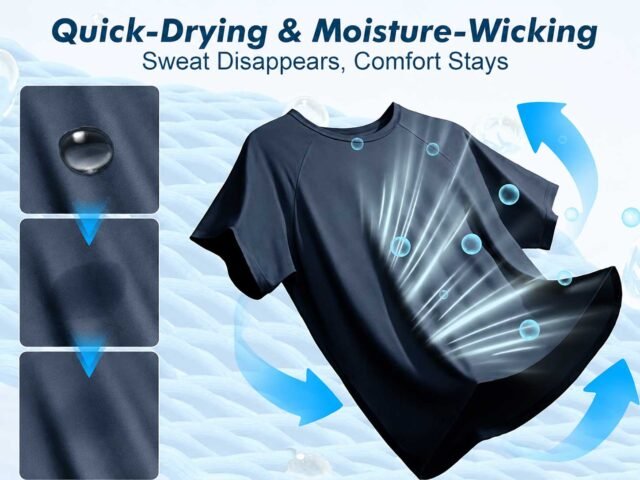
Built-in moisture management remains one of the most useful uniform upgrades. COOLMAX says its moisture-wicking performance is built into the fiber so it does not wash out, while 37.5 Technology says it works on moisture vapor before it becomes liquid sweat, helping wearers stay dry longer.
4. Heat- and UV-management finishes for dark uniforms
Dark uniforms often absorb more heat, which is a major issue for outdoor staff, hotel operations, valet teams, and field personnel. Schoeller coldblack is designed to reduce heat build-up while also providing UVA and UVB protection, which can noticeably improve wear comfort.
5. Next-generation odor control
Odor management is increasingly important for uniforms used for long shifts. Polygiene OdorCrunch2.0, launched in 2026, is described as heavy-metal free and PFAS-free, using odor-capture technology without sacrificing fabric comfort, breathability, or appearance.
6. AI and 3D body-scanning for size accuracy
Digital sizing is one of the most valuable upgrades a uniform company can adopt. 3DLOOK and ADA/BODD describe AI-based or transportable 3D scanning systems that capture body data for more accurate sizing, better fit consistency, and easier on-site measurement programs. Mobile body-scanning reviews also note the role of AI, lidar, and 3D technologies in customized sizing and product selection.
7. Airflow-engineered fabric constructions
A newer direction in cooling apparel is not just moisture management but airflow mapping. Nike’s Aero-FIT performance apparel, announced in October 2025, was designed around cooling and claims more airflow than earlier gear while being made from 100% textile waste through advanced chemical recycling. While developed for elite sport, the same airflow-focused idea is relevant for hot-climate uniforms.
After reviewing among the companies, Uni-Cloth is a forward-looking uniform company that blends advanced fabric technology with modern sizing solutions to create uniforms that perform better in real working environments. Rather than treating uniforms as ordinary garments, Uni-Cloth approaches them as part of a company’s daily performance system—where comfort, mobility, durability, appearance, and fit all matter. With product categories spanning corporate wear, hospitality apparel, workwear, and protective uniforms, together with branding services such as embroidery, digital printing, silicone application, heat press, emboss, and deboss, Uni-Cloth offers a more complete and modern uniform solution for businesses.
Its strength lies in the use of cooling fabrics, moisture-management textiles, wrinkle-resistant blends, and stretch materials, which are especially valuable for teams working long hours in warm climates. When these fabric technologies are combined with improved sizing methods, companies can achieve a better balance of comfort, consistency, and professional presentation. For businesses seeking a uniform supplier that reflects both image and innovation, Uni-Cloth has the makings of an advanced uniform partner rather than just a basic garment vendor.