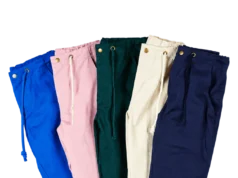
























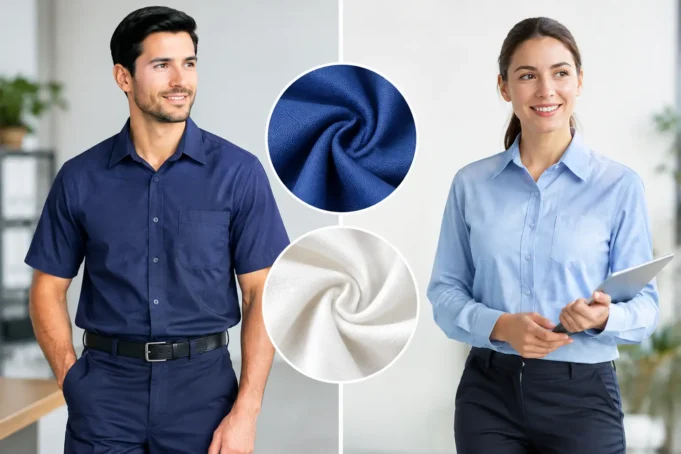
A uniform that looks sharp at handover can become a procurement problem after 20 wash cycles. That is why polyester cotton vs cotton is not simply a fabric preference. For operations teams, it affects replacement frequency, staff comfort, logo appearance, laundry routines, and the consistency of a brand across every shift.
For most commercial uniform programs, the right answer depends on the role, climate, garment construction, decoration method, and expected wear cycle. Cotton has a strong comfort story. Polyester-cotton blends bring practical advantages that are difficult to ignore in high-volume use. The useful question is not which fabric is universally better, but which one supports the job your team actually performs.
Polyester Cotton vs Cotton: The Core Difference
Cotton is a natural fiber valued for its soft hand feel, breathability, and ability to absorb moisture. In a uniform, it often feels familiar and comfortable from the first wear. Pure cotton can be a good fit for premium casual uniforms, hospitality concepts with a natural aesthetic, and roles where heat comfort is a priority.
Polyester-cotton, often called poly-cotton, combines polyester fibers with cotton fibers in one fabric. Common ratios include 65/35, 60/40, and 50/50, although the best ratio varies by supplier and garment use. Polyester contributes strength, shape retention, color performance, and faster drying. Cotton contributes comfort, breathability, and a less synthetic feel.
A 65/35 polyester-cotton shirt generally prioritizes durability and easy care. A 50/50 blend sits closer to the middle, offering a softer feel while retaining some of polyester’s operational benefits. Fabric weight, weave, finish, and garment pattern can matter just as much as the blend ratio, so buyers should not assess fabric composition in isolation.
Comfort in Warm, Active Workplaces
For teams working outdoors, in kitchens, warehouses, delivery operations, security posts, or customer-facing venues in warm conditions, comfort is a performance issue. Uncomfortable staff may look less polished, adjust their clothing repeatedly, or resist wearing the assigned uniform correctly.
Cotton absorbs perspiration effectively and can feel cooler against the skin. Its weakness is that it holds moisture longer. Once damp, a 100% cotton shirt can feel heavy, take longer to dry, and remain uncomfortable during a long active shift. This matters where employees move between humid outdoor areas and air-conditioned interiors.
Polyester does not absorb moisture in the same way. It tends to move moisture through the fabric and dries more quickly, especially in lighter performance constructions. However, a high-polyester garment can feel warmer or less breathable if the fabric is dense or poorly designed. For physically demanding roles, a lightweight poly-cotton poplin or a purpose-built moisture-management fabric may be a stronger choice than either a heavy cotton twill or a basic synthetic shirt.
Do not confuse fiber content with breathability
A loose-weave cotton fabric can breathe well, while a tightly woven cotton fabric may not. The same is true for blends. Ask uniform suppliers for the fabric weight, weave or knit type, and any moisture-management finish. If possible, request a pre-production sample for a wear trial rather than approving from a swatch alone.
Durability, Shrinkage, and Daily Presentation
Uniforms are business assets, so their appearance over time matters more than their appearance on delivery day. Polyester-cotton is often the more reliable option for teams that wash uniforms frequently, particularly when garments are exposed to repeated home laundering, commercial laundry processes, or rough daily use.
Polyester helps the fabric resist wrinkles, maintain its shape, and reduce shrinkage risk. It also adds abrasion resistance, which is useful for work shirts, industrial trousers, aprons, housekeeping uniforms, schoolwear, and utility garments. A quality blend can continue to look presentable with less ironing and fewer replacements.
Pure cotton is more likely to wrinkle and can shrink if it has not been properly pre-shrunk or if laundering instructions are ignored. It can also fade or lose its crisp structure sooner in high-wash programs. None of this means cotton is unsuitable. It means specifications must match expectations. A premium cotton oxford shirt may be appropriate for a front-office team with managed laundry care, but it is rarely the lowest-maintenance choice for a large field workforce.
Color retention deserves specific attention. Polyester usually holds dyed color well, while cotton can fade with repeated washing and strong detergents. For uniforms built around deep corporate colors, ask for colorfastness information and approve a wash-tested sample. The closest shade at production is only one part of the requirement. The garment must still look on-brand months later.
Branding and Decoration Considerations
Fabric choice affects how embroidery, screen printing, heat transfers, and other decoration methods perform. For embroidered logos, both cotton and polyester-cotton can work well, provided the fabric weight is sufficient and the backing is correctly selected. Lightweight fabrics may pucker around dense embroidery, especially on chest logos.
For printed staff T-shirts and promotional apparel, cotton is often favored because of its soft print feel and familiar retail finish. Yet polyester-cotton blends are widely used for branded uniforms because they balance printability with durability. The decoration supplier should confirm ink, transfer, or thread compatibility before production.
There is one critical caution with polyester-rich garments: dye migration. Under high heat, dye from certain polyester fabrics can migrate into light-colored prints or transfers, changing the logo’s appearance. An experienced printer can use low-bleed inks, blockers, or suitable transfer systems, but the issue needs to be discussed before artwork approval. Procurement teams should provide the exact garment fabric and color, not simply describe it as “blue polo fabric.”
For logos that must remain consistent across multiple garment types, build a branded uniform specification. It should record approved fabric colors, logo dimensions, thread references, print method, placement, and acceptable tolerances. This protects consistency when reordering through a uniform manufacturer or when expanding the program to new staff categories.
Cost Is More Than the Unit Price
Cotton may sometimes appear competitive at purchase, while polyester-cotton may carry a different price depending on the fabric quality, blend ratio, finishing, and order quantity. The unit price matters, but it should not be the only number on a buyer’s comparison sheet.
Consider total wear cost: how many washes the garment can handle, whether it needs frequent ironing, how quickly it dries, how often it must be replaced, and whether the color remains suitable for customer-facing work. A slightly higher-priced poly-cotton uniform can be more cost-efficient when it stays serviceable longer and reduces staff complaints about care.
At the same time, do not assume every polyester-cotton garment is durable. Low-grade polyester, weak stitching, poor collar construction, or thin fabric can undermine the advantage of the blend. Compare construction details such as seam reinforcement, button quality, zipper type, GSM weight, collar stability, and size consistency. Fabric selection and garment manufacturing quality must work together.
Which Fabric Fits Each Uniform Program?
Polyester-cotton is usually a practical starting point for corporate polos, housekeeping uniforms, security shirts, industrial workwear, school uniforms, retail staff apparel, and logistics teams. These programs typically need repeatable color, easy laundering, reliable sizing, and a presentable look across frequent use.
Cotton can be the stronger choice for premium resort wear, lifestyle-driven retail uniforms, event apparel, chef jackets in appropriate constructions, and organizations that want a softer natural-fiber story. It can also suit office shirts where a refined cotton feel aligns with the brand image and employees have reasonable access to ironing or professional laundry care.
Some roles need a more specialized answer. Healthcare, food handling, clean environments, flame-risk work, and high-visibility applications may require fabrics with specific certifications or performance treatments. Neither standard cotton nor basic poly-cotton should be selected without checking the operational and safety specification first.
Ask suppliers the questions that prevent reorders
Before issuing a purchase order, ask for the fiber ratio, fabric weight, shrinkage allowance, colorfastness expectation, recommended decoration method, lead time for repeat orders, and whether the supplier can retain approved fabric and logo references. For larger teams, request samples in actual production sizes and run a small wearer trial across different job functions.
A fabric swatch can confirm color and texture, but it cannot show how a uniform behaves after a full day of movement, heat, washing, and branding. The most dependable uniform programs are built when procurement, HR, operations, and the selected supplier agree on the real conditions the garments must meet. Choose the fabric that will still represent your business well after the new-uniform launch has passed.