




















A uniform logo has to survive more than a first impression. It faces daily washing, sunlight, movement, heat, front-desk conversations, site visits, and close customer scrutiny. The screen printing vs embroidery decision affects how a brand is seen, how long garments remain presentable, and how efficiently an organization can manage its uniform budget.
For Malaysian businesses sourcing custom made uniforms, there is no universal winner. A hotel reception polo, a construction crew T-shirt, a clinic tunic, and an event giveaway shirt place very different demands on decoration. The right method comes down to the logo artwork, garment fabric, wearing environment, order quantity, and the level of visual authority the organization wants to project.
Screen Printing vs Embroidery for Uniforms
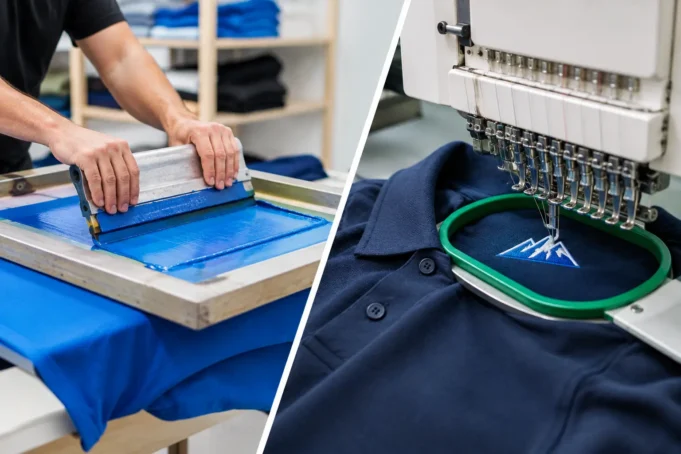
Screen printing applies ink directly to the garment through a prepared screen, one color at a time in traditional production. Modern suppliers may also offer digital print processes for certain artwork and order profiles, but screen printing remains a core option for bold, repeatable uniform graphics.
Embroidery creates a logo by stitching thread into the garment. The result has height, texture, and a premium hand feel that works particularly well on polos, woven shirts, jackets, caps, aprons, and heavier workwear.
The simplest distinction is visual. Screen printing sits on the fabric surface and is ideal for broad graphics or detailed color artwork. Embroidery becomes part of the garment structure and is strongest for compact logos with clear shapes. Yet procurement decisions should go beyond appearance. A decoration method that looks excellent on a sample can be inefficient, uncomfortable, or expensive when applied across hundreds of staff uniforms.
When Screen Printing Makes Commercial Sense
Screen printing is usually the more practical choice when a design is large, colorful, or intended for lightweight garments. A restaurant promotion shirt with a full-back graphic, a school sports day T-shirt, or a logistics team shirt with large safety messaging benefits from the method’s coverage and color impact.
It is also a strong option for orders with repeated artwork. Although traditional screen printing involves setup costs, the unit cost can become highly competitive as quantities increase. For companies ordering staff shirts for multiple branches, annual campaigns, or large events, this can create meaningful savings without reducing brand visibility.
Fine visual detail is another advantage. Gradients, photographs, small text, and complex illustrations are generally difficult to reproduce in thread. A capable print supplier can advise whether the artwork suits conventional screen printing, a transfer process, or digital printing, particularly when the logo contains several colors or tonal variation.
Comfort should be considered early. A small chest print on a cotton or performance T-shirt can feel light and unobtrusive. A large solid ink area, however, can reduce breathability and feel warmer in Malaysia’s humid working conditions. This matters for delivery crews, outdoor teams, production operators, and event staff who wear uniforms for long shifts.
Screen printing is not automatically the best choice for every T-shirt. Stretch fabrics, moisture-wicking polyester, dark garments, and high-heat work environments need the correct ink system and curing process. A buyer should ask the printer what print method is recommended for the actual fabric, not just approve a design on a computer screen.
Where Embroidery Earns Its Higher Cost
Embroidery gives uniforms immediate structure. A neatly stitched chest logo on a polo or button-front shirt often signals permanence, making it popular with corporate teams, hospitality staff, property management personnel, retail supervisors, security providers, and service technicians.
Unlike a large print, a compact embroidered logo does not create a broad layer over the fabric. On pique polos, twill shirts, fleece, jackets, and caps, it can be exceptionally durable and visually appropriate. The thread also retains its dimensional look after repeated washing when the garment, stabilizer, thread quality, and stitch settings are properly matched.
The trade-off is that embroidery pricing is influenced by stitch count, not only logo size. A dense, highly detailed logo can require many stitches and additional production time. Increasing a logo from 3 inches to 4 inches may have a larger cost effect than buyers expect, especially when it includes filled areas, borders, or multiple colors.
Embroidery also has physical limits. Very small text may become hard to read, fine lines can disappear, and dense stitching can pucker lightweight fabric. A logo created for a website or letterhead may need a simplified embroidery version. This is not a compromise in brand standards. It is a production adjustment that protects legibility at garment scale.
For lightweight performance polos or thin shirting, backing is often necessary to stabilize the embroidery. The backing may be visible inside the garment, and a large or dense chest design can feel stiff against the wearer. In these cases, a small print or transfer may provide a more comfortable uniform solution.
Match the Decoration to the Garment
The garment should lead the decision, not follow it. Embroidery is naturally suited to structured surfaces such as polos, Oxford shirts, caps, vests, fleece, and outerwear. It can also add value to executive and customer-facing uniforms where a refined finish supports the brand position.
Screen printing is especially effective for cotton T-shirts, team jerseys, event apparel, and garments needing large front or back communication. It is often the clearer choice for a safety message, department identifier, sponsor wall, campaign slogan, or large-format branding.
Some uniform programs benefit from using both. A facilities company might embroider a compact logo on employee polos while screen printing a large company name or safety message across the back of work shirts. A hospitality group may embroider front-of-house uniforms but print staff T-shirts for maintenance, setup crews, and promotional events. Consistency does not require every garment to use the same decoration method. It requires each application to look intentional and follow approved brand rules.
Cost, Quantity, and Reordering
Buyers often ask which option is cheaper. The honest answer is that it depends on artwork and volume.
Screen printing typically has upfront setup considerations for each color, then becomes more economical on larger runs. A one-color logo on several hundred shirts can be highly cost-efficient. More colors, more print locations, and smaller quantities raise the per-garment cost.
Embroidery usually requires digitizing the logo before production. After the file is approved, repeat orders are more straightforward, provided the same logo size, garment placement, and thread colors are used. However, a dense design remains more costly than a simple one because every garment requires stitch time.
When comparing supplier quotations, procurement teams should avoid comparing only the headline unit price. Confirm whether setup, digitizing, artwork revision, individual names, size ranges, packaging, and tax are included. Ask whether the quoted price assumes one chest location or also covers sleeve and back decoration. A low quote can become less competitive once those details are added.
Reordering deserves attention as well. A uniform supplier should retain approved artwork specifications, color references, placement measurements, and garment details. This helps a new staff member’s polo match uniforms ordered six months earlier. For multi-branch organizations, documented decoration standards reduce the risk of logo drift between batches.
Questions to Settle Before Approving Production
A sample is more useful when it answers practical questions. Check whether the logo size is visible at normal conversation distance, whether thread or ink colors align with the approved brand palette, and whether the placement looks consistent across garment sizes. On embroidery, inspect the reverse side and look for puckering around the logo. On printing, gently stretch the fabric to assess opacity, adhesion, and flexibility.
It is also sensible to clarify expected wash performance. Ask what wash instructions apply, whether the garment has been tested with the selected decoration, and how the supplier handles defects or inconsistency. For uniforms exposed to industrial laundering, chlorine, frequent heat drying, or outdoor UV exposure, state those conditions before production begins.
Do not overlook staff comfort. A decoration that looks polished on a flat sample may irritate the chest, trap heat, or pull on thin fabric during a full shift. Involving a small user group before approving a major order can prevent expensive corrections later.
A Better Brief for Your Uniform Supplier
A clear brief speeds up supplier comparison and produces better samples. Provide the logo in its best available format, identify the garment type and fabric composition, state the intended wearing environment, estimate quantities by size, and specify every branding location. Explain whether the order is for a one-off event, a seasonal campaign, or an ongoing uniform program.
For embroidery, include any minimum size requirements and ask whether small text needs to be simplified. For screen printing, identify the number of colors if known and state whether color matching is critical. Pantone references can be useful for established corporate palettes, though buyers should understand that thread, ink, fabric texture, and garment color can affect the final perceived shade.
The best decoration decision is the one that supports the job the uniform must do. Choose embroidery when a compact, polished mark needs to carry authority on structured garments. Choose screen printing when scale, color, comfort, and cost-efficient volume matter most. Then ask for a production sample that reflects the real garment, real logo, and real workday before committing the full order.