



















A logo can be visible without being loud. That is the commercial appeal of embossing versus debossing apparel: both methods create a tactile brand mark that feels more refined than a standard flat print. For uniform buyers, however, the choice is not only aesthetic. It affects garment selection, decoration durability, order quantity, logo readability, wearer comfort, and the impression staff make at the customer touchpoint.
Embossed and debossed branding is particularly relevant for premium corporate wear, hospitality uniforms, outerwear, activewear, retail teams, and promotional apparel where a polished, tone-on-tone finish supports the brand. The right result depends on matching the technique to the fabric, the logo, and the working environment.
What embossing and debossing do to apparel
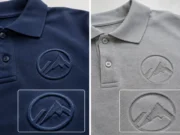
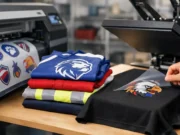
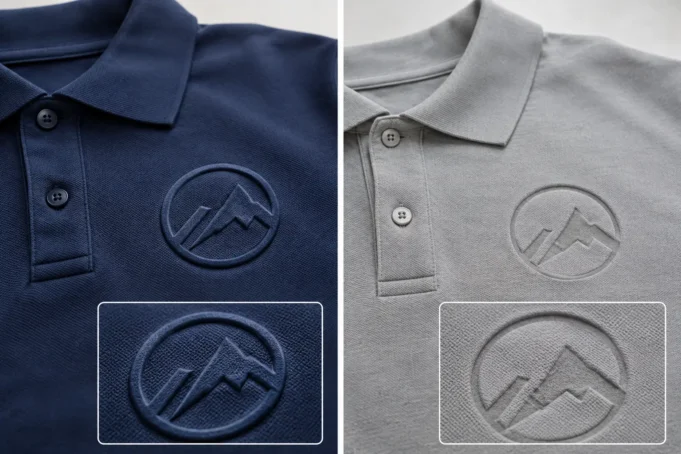
Embossing creates a raised design. Pressure, heat, and a shaped die or mold push the material upward, producing a three-dimensional surface that can be seen and felt. On apparel, the effect is often used on leather patches, faux leather badges, thick knitwear, fleece, soft-shell jackets, and certain heat-applied emblems.
Debossing does the opposite. It presses the logo or pattern into the material, leaving a recessed impression. The effect is subtle, professional, and especially effective on leather, polyurethane patches, suede-like materials, and structured fabrics with enough body to hold a clean indentation.
Neither technique should be confused with puff printing, raised silicone transfers, or 3D embroidery. Those are different decoration processes, even though all can add dimension. A buyer brief should state whether the requirement is a true pressed-in or raised surface, a silicone badge, or a stitched three-dimensional logo. That clarity prevents costly sampling errors.
Embossing versus debossing apparel: the visual difference
Embossing attracts attention through height, shadow, and touch. A raised mark can make a simple chest patch or sleeve badge feel more substantial, which suits brands that want a contemporary, sport-inspired, or premium technical look. On a black jacket, for example, a black embossed patch can preserve a controlled tonal appearance while still giving the logo presence at close range.
Debossing is quieter. Because the logo sits below the surface, it usually reads as a detail rather than a graphic statement. This can be a better fit for executive uniforms, hotel front-office teams, premium retail apparel, and branded accessories where overt decoration could weaken a tailored presentation.
The logo itself matters. Large, uncomplicated icons, bold lettering, and generous spacing reproduce best. Fine lines, tiny type, dense crests, and detailed illustrations may fill in, lose definition, or become hard to read after repeated wear. A supplier should review the artwork before committing to tooling, especially when the mark includes small trademark text or narrow gaps between elements.
Fabric and garment construction determine the result
The most common mistake is choosing a decoration method before confirming the garment material. Embossing and debossing rely on the surface having enough thickness, stability, or suitable coating to retain an impression. A heavyweight cotton fleece may accept an effect that a lightweight performance polo cannot hold consistently.
Leather and faux leather are among the strongest candidates. They offer a smooth face, defined edges, and a premium appearance, making them popular for logo patches on caps, work jackets, bags, and corporate gift apparel. A debossed faux leather patch can also be sewn onto a garment, avoiding direct pressure on a stretch or heat-sensitive fabric.
Soft-shell fabrics, neoprene-style materials, bonded textiles, and selected coated synthetics can work well, but each requires testing. Heat and pressure that create a strong impression may also flatten the face, affect a waterproof coating, leave shine marks, or damage a membrane. For rainwear, safety apparel, and technical outerwear, suppliers should test decoration on actual production fabric rather than a similar swatch.
Stretch fabrics deserve extra caution. An embossed or debossed area may distort when the garment is pulled, particularly on fitted uniforms, leggings, or athletic tops. Positioning also matters. A mark placed on a stable panel, placket, cuff, collar tab, or separate patch generally performs better than one pressed directly across a high-stretch chest area.
Where each method fits in a uniform program
Embossing works well when the brand needs controlled visibility. It can elevate a fleece vest for a property management team, add dimensional identity to a gym staff jacket, or create a distinctive patch for a delivery or field-service uniform. It is also useful when color matching is difficult or when a buyer wants to avoid adding another ink or thread color to the specification.
Debossing is often the stronger choice for understated identity. Consider a recessed logo on a faux leather badge for hotel concierge uniforms, premium corporate outerwear, salon aprons, or management-level apparel. It supports a polished look without competing with name embroidery, department labels, or the garment’s existing design lines.
For staff uniforms that must be recognized from a distance, neither may be sufficient as the only branding method. A tonal embossed or debossed mark can disappear under low lighting or from several meters away. In these cases, pair the premium detail with a clearer decoration method such as embroidery, screen printing, a heat transfer, or a high-contrast woven badge in another location.
Durability, laundering, and daily use
A well-made embossed or debossed patch can be durable, but the result is only as reliable as the material, adhesive, attachment method, and care process. Direct impressions in suitable material may last well. Heat-applied patches require a compatible adhesive, correct press settings, and adequate bonding time. Sewn patches add security for workwear that sees frequent industrial washing or hard use.
Laundry requirements should be discussed early. Hospitality, healthcare, food service, and industrial uniform programs may require frequent washing, tumble drying, stain treatment, or commercial laundry handling. A decoration that looks excellent on a showroom sample may crack, delaminate, flatten, or discolor after repeated wash cycles if it has not been tested for the real use case.
Ask suppliers how they validate the decoration. Useful questions include whether the proposed patch has been wash tested, whether the garment fabric has been tested for heat marking, and whether the supplier recommends washing inside out, low heat drying, or avoiding bleach. Care instructions are not a minor afterthought when replacement costs and brand consistency are involved.
Cost, minimums, and sampling considerations
Embossing and debossing are rarely the lowest-cost option for small, simple uniform orders because custom dies, molds, or patch tooling may be required. The setup cost can become more reasonable when spread across a larger run, repeat orders, or multiple garment types using the same logo.
For a one-off event shirt or a small team order, a standard transfer or embroidery may offer better value. For a multi-location uniform rollout, premium welcome kits, or a recurring outerwear program, the elevated finish and repeatable tooling can justify the investment.
Do not approve from a digital mockup alone. Request a physical sample showing the actual logo, final patch material, intended garment color, and placement. Review it under normal workplace lighting and from both close range and customer-facing distance. Check whether sharp edges feel uncomfortable, whether the logo remains legible, and whether the decoration sits flat after the garment is worn.
Briefing a supplier for a better result
A complete buyer brief helps a uniform supplier recommend the right route rather than forcing a preferred technique onto the wrong garment. Provide the vector logo, artwork dimensions, garment model, fabric composition, target quantity, color requirements, placement, and expected laundry conditions. If the apparel will be worn outdoors, in air-conditioned hospitality spaces, near heat, or in high-mobility roles, include that information too.
It is also worth asking for alternatives. A supplier may recommend a debossed patch instead of direct debossing, a raised silicone transfer instead of embossing, or embroidery for small logos that would not reproduce clearly. These are not compromises when they improve durability and legibility. They are practical production decisions.
A custom made uniform should work hard for the organization, not simply look impressive at handover. Choose embossing when texture and dimensional visibility serve the brand. Choose debossing when restrained detail fits the environment. Then insist on a real sample, realistic wash testing, and a supplier recommendation grounded in how the uniform will actually be worn.