



















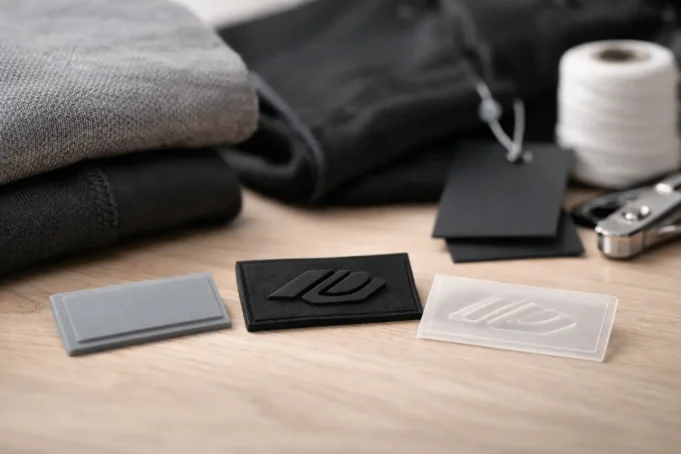
A hotel polo can look premium on the showroom table and still lose its brand impact after six months of washing. The detail that often separates a standard issued garment from a recognizable uniform program is the trim. Silicone labels for clothing give logos, department names, and product identifiers a raised, tactile finish that holds visual definition where some printed decorations may fade or crack.
For procurement teams, however, a silicone label is not simply a logo added at the end of production. Its thickness, attachment method, color treatment, and placement all affect comfort, durability, lead time, and unit cost. The right choice depends on the garment’s job, not just the appearance of the sample.
Where Silicone Labels for Clothing Fit Best
Silicone labels are flexible, rubber-like branded components molded in silicone and applied to garments by sewing, heat bonding, adhesive backing, or a combination of methods. They are often called silicone patches, 3D badges, rubber labels, or molded labels. The terms overlap, but buyers should ask suppliers for the exact material formulation and attachment specification rather than relying on product names alone.
Their key advantage is dimensional branding. A molded logo has depth, clean edges, and a distinctive touch that makes a uniform feel more considered. This is useful for sportswear-inspired staff apparel, outdoor workwear, delivery uniforms, hospitality outerwear, retail merchandise, bags, caps, and footwear-related accessories.
Silicone also handles moisture well and generally resists cracking better than many rigid plastic alternatives. That makes it a practical option for active teams, cleaning crews, food-service staff, logistics operations, and other roles where garments face frequent laundering or exposure to humidity.
That said, silicone is not the best decoration for every uniform. Fine text can become difficult to read, especially at small sizes. A thick patch can feel intrusive on lightweight knitwear. For a large chest logo on a breathable performance shirt, screen printing, transfer decoration, or embroidery may be more suitable. Silicone labels work best when they are treated as a focused brand accent rather than a default solution.
Choose the Label Construction Before Approving Artwork
Most sourcing problems begin when buyers approve a visual mockup without confirming how the label will be manufactured. Artwork that looks sharp on screen may need adjustment for molding. Small gaps can fill in, ultra-thin lines can disappear, and tiny lettering may lose definition.
A supplier should review the artwork for moldability before production. Simplifying the mark may produce a better result than forcing every detail into a small patch. For corporate uniforms, it is often more effective to mold a logo symbol and use embroidery or printing for supporting text, such as a staff name, branch, or job title.
Flat, 2D, and 3D effects
A flat silicone label has a clean, modern appearance and usually works well for simple branding. A 2D label uses raised and recessed sections to distinguish colors and outlines. A 3D construction creates more pronounced height variation, giving the badge a more technical or premium look.
More depth is not always better. Deeply molded labels can catch on surfaces, feel heavier, and cost more due to tooling complexity. For housekeeping, healthcare, and food-handling uniforms, a flatter profile may be easier to clean and less likely to snag. For jackets, bags, and caps, a bolder 3D effect can make better commercial sense.
Sew-on, heat-applied, or hybrid attachment
Sew-on labels provide a visible stitched edge and a dependable mechanical attachment. They are well suited to work jackets, bags, structured caps, and garments that can accommodate stitching without affecting waterproof membranes or insulation. The stitch line itself becomes part of the design, so thread color and edge margin should be approved with the sample.
Heat-applied silicone labels create a cleaner finish without a visible seam. They can be a strong option for performance polos, stretch garments, and technical outerwear, but the bond must be compatible with the garment fabric. Heat, pressure, and dwell time vary by material. A label that adheres well to a cotton-polyester polo may fail on a coated nylon shell or a highly elastic fabric.
Hybrid construction uses both adhesive and stitching, sometimes with a partial stitch-down design. This can add security for high-wear applications, although it may increase labor and production time. Buyers should choose the attachment method based on wash demands, fabric behavior, and garment construction, not on the appearance of a sample alone.
Match the Label to the Uniform’s Working Conditions
Uniform decoration should survive the same conditions as the people wearing it. A corporate blazer worn for front-desk duties has different demands from a delivery jacket exposed to rain, friction, and vehicle movement.
Start by defining the care cycle. Will garments be washed at home, commercially laundered, or dry cleaned? Will they be tumble dried? Is bleach, disinfectant, or high-temperature washing part of the process? These details affect both the silicone material and the adhesive system.
For industrial or institutional laundering, request testing information rather than accepting a general claim of “washable.” Ask what wash temperature was used, how many cycles were tested, whether tumble drying was included, and whether testing was performed on the same garment fabric. A label supplier may have strong results on one substrate but limited data on another.
Weather and abrasion matter too. Silicone is typically a good choice for wet environments, but edge lifting can occur when a heat-applied label is repeatedly flexed, rubbed, or exposed to poor bonding conditions. Sleeve locations, pocket edges, side seams, and lower hems experience more movement than a stable upper-chest panel.
Color also deserves practical review. A bright white silicone patch can show dye transfer or surface dirt faster than an embroidered logo. Matte finishes often look more refined on workwear and can reduce the visual impact of scuffs. Glossy silicone can suit sports or promotional apparel, but it may make fingerprints and surface marks more noticeable.
Placement Is a Performance Decision
The most attractive placement is not necessarily the most durable or comfortable. On polo shirts, a small left-chest label may support brand recognition without interfering with movement. On jackets, a sleeve badge or chest tab can provide a more technical look. On caps and bags, silicone patches are highly visible and less likely to affect wearer comfort.
Avoid placing thick labels directly over areas that bend constantly, such as elbows, waistlines, or the center of the upper back. On lightweight garments, check the reverse side as well. A label with a hard edge or heavy adhesive can irritate the wearer, particularly when applied near the neck, underarm, or inside-facing portion of a garment.
For uniforms with safety requirements, branding placement must not compromise reflective tape, high-visibility zones, protective panels, or access to badges and identification. Procurement teams should involve the end user and safety coordinator early, especially when a standard garment is being customized for operational work.
What to Request From a Silicone Label Supplier
A physical pre-production sample is essential for commercial orders. Digital proofs can confirm general layout and color direction, but they cannot show flexibility, edge quality, thickness, adhesion, or how the label behaves after laundering.
When comparing supplier quotations, make sure the scope is consistent. A lower price may exclude mold charges, color matching, application labor, garment handling, or testing. It may also be based on a thinner label, a simpler color count, or a different attachment method.
Ask suppliers to confirm these production details:
- Final dimensions, thickness range, and molded edge style
- Silicone color references and whether colors are matched to a brand standard
- Attachment method, application temperature, and compatibility with the selected fabric
- Minimum order quantity, mold or tooling charges, and repeat-order terms
- Sample approval process, lead time, and quality inspection standards
- Wash-test conditions and any limitations on care instructions
If the order includes multiple garment styles, do not assume one label specification will work across all of them. A silicone badge that performs well on a heavyweight jacket may need a lighter version or different adhesive for a stretch polo. Separate trials can prevent expensive rework after bulk production begins.
Balance Premium Detail With Program Cost
Silicone labels can elevate a uniform program, but they bring fixed setup costs and more production variables than a simple printed mark. They are most cost-effective when a logo will be repeated across a meaningful quantity of garments, bags, or accessories. For a short campaign or small staff order, a transfer print may deliver the necessary branding at a lower entry cost.
The strongest use case is usually a long-running program where consistency matters. A molded badge can become a recognizable component across jackets, caps, backpacks, event apparel, and retail-facing uniforms. Once the mold and specification are approved, repeat orders are easier to control – provided the buyer documents the approved color, dimensions, placement, and application process.
Treat the first sample as a working garment, not a presentation piece. Wash it, flex it, inspect the edges, and ask a staff member to wear it through a normal shift. The best silicone label is the one that continues to look intentional after the uniform has done real work.