






















Mechanic Shop Uniforms: 7 Avoid Techniques
Choosing the right mechanic shop uniforms is one of those decisions that looks simple on the surface but can quietly cause real problems if you get it wrong. Whether you manage a busy garage or run a small independent auto shop, the clothing your team wears affects safety, professionalism, and even productivity. This guide walks through 7 clear techniques to help you avoid the most common and costly mistakes shops make when buying, managing, and maintaining uniforms.
- Avoiding the Wrong Fabric Choice
- Avoiding Poor Fit and Sizing Errors
- Avoiding a Lack of Branding Strategy
- Avoiding Safety Feature Gaps
- Avoiding Bad Uniform Care Habits
- Avoiding Delayed Uniform Replacement
- Avoiding the Wrong Supplier for Mechanic Shop Uniforms
- Frequently Asked Questions
- Wrapping It All Up
Avoiding the Wrong Fabric Choice for Mechanic Shop Uniforms
Fabric is the foundation of any good mechanic shop uniforms program. The wrong material can make a tough job even harder. Many shop owners default to whatever is cheapest without thinking about how the fabric performs under real working conditions. This is one of the most common and avoidable mistakes in automotive work clothing.
In an auto shop, workers deal with grease, oil, chemical solvents, and extreme heat around engines and exhaust systems. A thin polyester blend might feel lightweight at first, but it can melt near heat sources, which is a genuine safety risk. It also tends to hold onto oil stains and odors far more stubbornly than natural or blended fabrics.
The best fabrics for shop environments in 2026 include:
- 100% cotton or cotton-rich blends: Breathable, comfortable, and naturally more resistant to melting near heat
- Flame-resistant cotton (FR cotton): Essential for shops that work near welding equipment or fuel systems
- Ripstop fabric: Reinforced weave that resists tearing without adding weight
- Polyester-cotton blends (65/35): A balance of durability and comfort, good for milder shop environments
Ask your supplier for a fabric specification sheet before committing to a bulk order. Test a sample in your actual shop conditions for at least two weeks before making a full purchase.
Why Shop Uniform Fabric Matters for Long-Term Value
Cheap fabric wears out faster, which means you replace uniforms more often. When you calculate cost per wear over a full year, a higher-quality shop uniform fabric almost always works out more economical. It also reduces the chance of a fabric-related workplace incident, which can carry serious liability for a shop owner.
Avoiding Poor Fit and Sizing Errors
A uniform that does not fit properly is not just uncomfortable. It can actually be dangerous in a workshop setting. Loose sleeves near rotating parts or a shirt that is too long and gets caught on equipment are real hazards. Getting sizing right is a non-negotiable part of any smart mechanic shop uniforms strategy.
Many shops make the mistake of ordering a standard range of sizes without actually measuring their team. People carry weight differently, and standard sizing charts do not always reflect how clothing fits in movement-heavy jobs. Always take actual body measurements and compare them against the garment’s fit guide rather than relying on generic size labels.
Key fit considerations include:
- Shoulder seams should sit squarely on the shoulder, not drooping down the arm
- Sleeve length must keep cuffs away from machinery when arms are extended
- Waist and hip measurements should allow free movement without excess fabric
- Inseam length on work pants matters as much as waist size
Offering a try-on session before the final order goes in is worth the small extra time it takes. Workers who feel comfortable in their uniforms are more likely to wear them correctly and consistently.
Avoiding a Lack of Branding Strategy
Many small and mid-sized auto shops spend money on mechanic shop uniforms and then completely overlook branding. A uniform without your shop’s name, logo, or colors is a missed opportunity. Customers who see your team working on their car want to feel confident they are dealing with professionals, and clear branding builds exactly that kind of trust.
A consistent branded uniform also helps with marketing. When your technicians are visible outside the shop, say at a customer’s breakdown location or at a local event, they become walking advertisements for your business. This is especially valuable for independent shops competing against franchised chains.
Branding techniques that work well on automotive work clothing include:
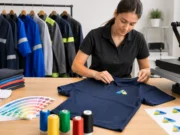
- Embroidered chest logos for a clean, long-lasting look
- Screen-printed back panels for high visibility branding
- Name badges or embroidered first names for a personal, customer-friendly touch
- Consistent color schemes that match your shop’s signage and website
Avoid iron-on patches or printed decals that peel and fade quickly in a wash-heavy environment. Embroidery is worth the extra cost because it stays sharp through hundreds of washes.
Avoiding Safety Feature Gaps in Mechanic Shop Uniforms
Safety is not optional in an auto shop environment. Mechanic shop uniforms need to meet real safety standards, not just look the part. One of the most damaging mistakes a shop can make is treating uniforms purely as an aesthetic choice while ignoring protective features.
In 2026, workplace safety standards continue to tighten, and employers are increasingly held accountable for providing appropriate protective clothing. The Occupational Safety and Health Administration outlines personal protective equipment requirements that extend to workwear in environments with chemical, thermal, and mechanical hazards.
Safety features to look for in automotive work clothing include:
- Flame-resistant ratings (FR) for shops near welding or fuel work
- High-visibility panels or accents if workers ever move near traffic or in low-light areas
- Reinforced knees on work pants for employees who regularly work on the floor
- Closed-toe footwear compatibility with uniform trouser cuffs
- Chemical-resistant treatment for mechanics handling solvents and brake fluids
Review your safety checklist at least once a year. As services offered by your shop change, your uniform safety requirements may change with them.
Avoiding Bad Uniform Care Habits
Even the best mechanic shop uniforms will degrade quickly if they are not cared for properly. Poor laundering habits are responsible for a huge portion of premature uniform replacement costs. This is an area where good uniform maintenance tips can save a shop real money every year.
Grease and oil stains are stubborn and need pre-treatment before going into a standard wash cycle. Throwing a heavily soiled uniform straight into a home washing machine on a hot cycle can actually set the stain permanently rather than remove it. It can also damage FR fabric treatments, reducing the protective properties of the garment.
Smart care practices for shop uniforms include:
- Pre-treat oil and grease stains with a degreaser or liquid dish soap before washing
- Wash FR garments separately and according to the manufacturer’s care label
- Avoid fabric softeners on FR clothing because they can coat fibers and reduce flame resistance
- Use a warm (not hot) wash cycle to preserve fabric integrity and color
- Air-dry when possible to extend garment life and preserve any chemical-resistant treatments
It is worth noting that just as leather apron care requires specific treatment protocols to maintain protective properties, mechanic uniforms with specialist fabrics deserve the same level of attention. Providing each employee with a simple care guide card when they receive their uniform reduces costly mistakes significantly.
Some shops also find value in a managed uniform rental and laundry service. These services handle cleaning professionally and replace worn garments on a schedule, reducing the management burden on the shop owner.
Avoiding Delayed Uniform Replacement
Wearing worn-out uniforms is a problem that sneaks up on shops gradually. A garment that looks fine from a distance may have fraying seams, faded logos, and thinning fabric that compromises both safety and professionalism. Delaying replacement is a false economy that costs more in the long run.
Build a simple uniform replacement schedule into your operations. Most quality shop uniforms last between 12 and 18 months under daily wear and regular washing. Some higher-end garments can go longer, but that depends on the specific role and how hard the uniform is worked.
Signs that a uniform needs replacement include:
- Visible thinning or holes in high-wear areas like knees, elbows, and seat
- Fading that makes branding and safety markings hard to read
- Fraying at cuffs, collar, or seams that could catch on equipment
- Loss of FR or chemical-resistant properties after too many washes
- Persistent stains or odors that do not respond to proper laundering
Assign a team member to conduct quarterly uniform audits. A quick visual check every three months catches deteriorating garments before they become a liability. Industries that rely on professional appearance, from airport teams (think about how airport uniform design sets the standard for visible professionalism) to customer-facing auto shop staff, understand that worn clothing undermines trust instantly.
Avoiding the Wrong Supplier for Mechanic Shop Uniforms
Your supplier choice shapes the entire mechanic shop uniforms experience. The wrong supplier creates problems that go well beyond the initial purchase. Late deliveries, inconsistent sizing, poor fabric quality, and unhelpful customer service all become your headaches once the invoice is paid.
Choosing a supplier purely on price is one of the biggest mistakes in this space. A supplier who offers attractive bulk pricing but cannot deliver consistent quality or reliably restock your most used sizes will cost you more in time and frustration than a slightly pricier but reliable partner.
Key questions to ask any potential uniform supplier include:
- What is their minimum order quantity and turnaround time for reorders?
- Do they offer fabric samples before bulk orders?
- Can they accommodate custom embroidery or screen printing?
- What is their return or exchange policy for sizing errors?
- Do they carry a full range of sizes including extended sizes?
Ask for references from other automotive or industrial clients they supply. A good supplier will be comfortable connecting you with existing customers. Just as sports club uniform design programs rely on suppliers who understand specific performance requirements, automotive uniforms need a partner who understands the unique demands of shop environments. Reading verified reviews and requesting a trial order before committing to a long-term contract is always a smart move.
Frequently Asked Questions
What is the best fabric for mechanic shop uniforms in 2026?
The best fabric depends on the specific tasks your mechanics perform. For general shop work, a 65/35 polyester-cotton blend offers a good balance of durability and comfort. For shops that perform welding or work near fuel systems, flame-resistant cotton is the safer choice. Always check that the fabric meets relevant workplace safety standards for your environment. Testing a sample garment in your actual shop conditions before bulk ordering saves money and prevents regret. Quality fabric pays for itself through reduced replacement frequency and fewer safety incidents over a 12-month period.
How often should mechanic shop uniforms be replaced?
Most quality mechanic shop uniforms last between 12 and 18 months under daily use and regular professional laundering. However, replacement should be triggered by condition, not just time. Look for signs like fraying seams, thinning fabric in high-wear areas, faded branding, and loss of protective properties. Running a quarterly visual audit of your team’s uniforms is the most reliable way to stay on top of this. Building replacement costs into your annual budget prevents unplanned expenses and keeps your team consistently professional-looking throughout the year.
Are flame-resistant uniforms required by law for auto mechanics?
Flame-resistant uniforms are not universally required for all auto mechanics, but they are strongly recommended and may be legally required in specific situations. Mechanics who perform welding, work near fuel systems, or handle flammable solvents regularly fall under workplace safety guidelines that may mandate FR-rated clothing. In the United States, OSHA regulations outline personal protective equipment requirements for hazardous environments. It is worth reviewing your specific shop’s services and consulting your local workplace safety authority to determine whether FR uniforms are obligatory or simply best practice for your particular operation and risk profile.
How can I keep mechanic uniforms looking professional longer?
Consistent care is the biggest factor. Pre-treat grease and oil stains before washing, avoid hot wash cycles that can set stains and damage fabric treatments, and never use fabric softeners on FR-rated garments. Air-drying instead of machine drying extends garment life noticeably. Providing employees with a simple care guide reduces mistakes made at home. Some shops invest in a managed laundry service that handles cleaning professionally, which is especially cost-effective for larger teams. Following solid uniform maintenance tips consistently keeps uniforms looking sharp for a longer service life and delays replacement costs.
What branding options work best on automotive work clothing?
Embroidery is the gold standard for automotive work clothing branding because it is durable, professional-looking, and survives repeated industrial washing without peeling or fading. Screen printing works well for large back designs where embroidery would be cost-prohibitive. Avoid iron-on patches or adhesive decals in a workshop environment because heat, grease, and frequent washing cause them to deteriorate quickly. For a personalized touch that improves customer experience, adding embroidered first names alongside your shop logo is a popular and cost-effective option that many independent shops use to differentiate themselves from chain competitors.
Wrapping It All Up
Mechanic shop uniforms are a bigger investment than many shop owners initially realize, but they are also one of the most visible parts of your business. Getting them right means thinking carefully about fabric performance, fit, safety features, branding, care practices, replacement timing, and supplier reliability.
The 7 techniques covered here are not complicated, but they are easy to overlook when you are busy running a shop. Working through each one systematically helps you build a uniform program that protects your team, impresses your customers, and delivers real value over time.
Start with fabric and safety, because those two elements affect everything else. Then work outward to branding and supplier selection. With the right approach, your mechanic shop uniforms become an asset to your business rather than just another operating cost.