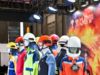





















Train Crew Uniform Standards: 5 Amazing Benefits
Train crew uniform standards shape the entire passenger experience from the moment a traveller steps onto the platform. When you see a well-dressed rail employee, your trust in that service goes up almost immediately. This article breaks down what train crew uniform standards actually involve, why operators invest so much energy getting them right, and the five amazing benefits that come from a consistent, well-enforced dress code across the rail network in 2026.
- Benefit 1: Stronger Passenger Trust
- Benefit 2: Improved Safety and Visibility
- Benefit 3: Clear Brand Identity
- Benefit 4: Better Crew Morale and Team Unity
- Benefit 5: Easier Compliance and Accountability
- Understanding Rail Staff Dress Code Requirements
- How Passenger Train Uniform Policy Works in Practice
- Maintaining Crew Uniform Compliance Day to Day
- Frequently Asked Questions
- Final Thoughts
Benefit 1: Stronger Passenger Trust
One of the most immediate and measurable outcomes of solid train crew uniform standards is the trust they create with passengers. When every conductor, driver, and onboard service team member looks consistent and professional, the travelling public feels safe and confident in the service they are using.
Passengers rely on visual cues when they need help. A clearly dressed crew member is easy to spot in a busy carriage or on a crowded platform. Without recognisable uniforms, travellers may hesitate to approach staff, which can slow down the resolution of issues and increase passenger anxiety during delays or disruptions.
Research from the transport and hospitality sectors consistently shows that a professional appearance directly influences customer satisfaction scores. Rail operators that enforce train crew uniform standards see fewer complaints related to staff attitude, partly because a polished uniform sets a professional tone before a single word is spoken.
- Passengers identify crew instantly in an emergency
- Smart presentation signals reliability and care
- Consistency across all crew members reduces confusion on multi-carriage trains
Benefit 2: Improved Safety and Visibility
Safety is at the heart of every transport operation, and train crew uniform standards play a direct role in keeping both staff and passengers safe. Rail environments involve moving vehicles, electrical infrastructure, and large crowds, all of which create genuine hazards.
Modern rail crew uniforms in 2026 are designed with safety features built in from the start. High-contrast piping, reflective strips on certain roles, and durable outer layers protect crew members who work in operational zones. These are not cosmetic choices. They are engineered responses to real workplace risk.
Different roles require different safety specifications. A platform staff member may need a vest with higher reflectivity than an onboard ticket inspector. Train crew uniform standards typically define these distinctions clearly, ensuring each role gets the protection it needs without over-specifying or causing discomfort. This is similar in principle to how construction site safety gear is specified by risk level and task type rather than applied as a one-size-fits-all solution.
- Reflective elements are mandatory for trackside and platform roles
- Flame-resistant fabrics apply to crew working near traction equipment
- Bright colour accents help passengers locate staff quickly during evacuations
- Durable footwear requirements reduce slip and trip incidents in wet conditions
Benefit 3: Clear Brand Identity
Every rail operator has a brand, and train crew uniform standards are one of the most visible expressions of that brand. A passenger travelling on a network for the first time forms an impression within seconds, and the uniform is a large part of that impression.
Getting the brand identity right through uniforms involves more than simply printing a logo on a shirt. Colour palettes, fabric choices, cut and tailoring, and accessory guidelines all come together to create a coherent visual language. Much like how airport uniform design communicates the values of an aviation business to travellers, rail uniforms signal whether a service is premium, efficient, friendly, or modern.
Rail operators in 2026 are increasingly treating their crew uniforms as a strategic brand asset rather than a procurement necessity. A strong uniform design programme builds recognition over time and can even become part of a network’s cultural identity. Think about the iconic styles associated with major European or Asian rail systems. The uniform is instantly associated with the experience.
How Train Crew Uniform Standards Support Branding Goals
To make branding work through uniforms, operators need consistency. That means standardised garments across all hubs and routes, clear guidelines for how to wear each item, and a replacement cycle that keeps garments looking fresh. Train crew uniform standards that include detailed branding rules help operators avoid the gradual drift that happens when individual employees or depots interpret guidelines differently. The result is a network where every staff member looks like they belong to the same team, wherever the passenger boards.
Benefit 4: Better Crew Morale and Team Unity
It might seem surprising, but a well-designed uniform genuinely improves how crew members feel about their work. When train crew uniform standards produce garments that look good, fit well, and are practical for the job, staff wear them with pride rather than reluctance.
Uniforms create a sense of belonging. When everyone on a team wears the same well-considered outfit, it reinforces that they are part of something larger than their individual role. This is especially important in rail, where crews may work across different depots, routes, and shift patterns without seeing their colleagues regularly.
Comfort is a key driver of morale. A uniform that is too hot in summer, too stiff to move in freely, or made from an irritating fabric will generate constant low-level dissatisfaction. Operators that consult crew during the design process and use quality, breathable materials see higher acceptance rates and fewer complaints about the dress code. A passenger train uniform policy that includes crew input tends to result in garments that people actually want to wear.
- Inclusive sizing options ensure all body types are accommodated
- Seasonal variation in fabrics keeps crew comfortable year-round
- Well-fitted uniforms increase confidence in customer-facing interactions
- Shared appearance fosters team cohesion across different depots
- Recognition of different roles through design details gives crew a sense of identity within the team
Benefit 5: Easier Compliance and Accountability
Clear train crew uniform standards make compliance much simpler to manage for both supervisors and crew members. When the expectations are written down, illustrated, and issued to every employee, there is no ambiguity about what is or is not acceptable.
Accountability improves naturally when standards are specific. A vague instruction to dress smartly leaves room for wide interpretation. A detailed standard that defines which shirt, trousers, jacket, footwear, and accessories are permitted for each role removes the guesswork entirely. Supervisors can conduct a quick uniform check at the start of a shift without needing to make subjective judgements.
Crew uniform compliance also matters for insurance and regulatory purposes. Some rail safety authorities require documented evidence that staff responsible for safety-critical tasks are wearing the correct protective garments. Having a formal standard that is recorded and enforced creates the paper trail that auditors and regulators need to see. This is especially relevant for roles involving track access, train dispatch, or first response duties.
Understanding Rail Staff Dress Code Requirements
A rail staff dress code goes beyond the garments themselves. It covers how items are worn, what personal accessories are permitted, and how to handle the uniform outside of working hours. These details matter more than they might initially seem.
For example, most rail operators specify that uniforms must not be worn in a way that could be confused with civilian clothing. This means jackets must be properly fastened, name badges must be visible, and branded items must not be mixed with non-issued clothing. The goal is always to ensure crew members are unambiguously identifiable as employees of that rail network.
Accessories present a common challenge. Jewellery that could get caught in equipment, unsecured hair around moving parts, and footwear without adequate grip or toe protection all create real risks. A well-constructed rail staff dress code addresses these scenarios directly rather than leaving them open to interpretation by individual employees.
- Name badges and ID cards are always required during operational hours
- Footwear must meet minimum toe-protection and slip-resistance standards
- Hair must be secured if longer than a specified length for roles near machinery
- Personal modifications to issued garments are generally not permitted
How Passenger Train Uniform Policy Works in Practice
A passenger train uniform policy is the formal document that translates train crew uniform standards into day-to-day instructions. It tells crew members exactly what they need to wear, when they need to wear it, and what to do when items are damaged, lost, or need replacing.
Effective policies are written in plain language and accompanied by visual guides. A photograph showing the correct way to wear each element of the uniform removes any remaining uncertainty. Operators that use digital platforms to distribute and update these guides find that compliance improves because crew can refer back to the guidelines at any time on their phone or tablet.
Policies also need to account for special situations. What does a crew member wear during extreme heat events? How should uniforms be adapted for a staff member with a medical or religious accommodation? A good passenger train uniform policy anticipates these questions and provides clear answers, avoiding the need for ad hoc decisions under pressure. For operators interested in how fabric selection influences comfort and performance, understanding concepts like those covered in t-shirt fabric selection can help inform better material choices for passenger-facing crew.
Key Elements of a Passenger Train Uniform Policy
A complete policy typically covers the following areas in detail. First, it lists all issued garments and specifies when each must be worn. Second, it sets out the grooming standards expected of all crew. Third, it explains the process for reporting damaged or worn-out garments and getting replacements. Fourth, it describes the disciplinary process if standards are not followed. Having these elements documented clearly protects both the operator and the employee.
Maintaining Crew Uniform Compliance Day to Day
Even the best-designed train crew uniform standards only deliver their benefits when they are consistently followed. Maintaining crew uniform compliance across a large and geographically dispersed workforce is one of the ongoing operational challenges that rail managers face in 2026.
Regular audits help. Supervisors who check uniforms at the start of each shift normalise compliance as part of the working routine rather than making it feel like a punitive exercise. When checks happen consistently and respectfully, crew members understand that the standards apply equally to everyone and are not enforced selectively.
Replacement cycles are another practical factor. A uniform that starts to look worn, faded, or ill-fitting stops delivering its intended benefits regardless of what the policy says. Operators that build a structured replacement schedule into their procurement planning ensure that garments remain in good condition throughout their intended service life. This connects to broader practices around uniform management, much like those discussed in cleaning staff uniform policy, where consistent upkeep and replacement schedules are central to maintaining a professional appearance. The Rail Safety and Standards Board provides guidance on staff welfare and working conditions that can inform how operators structure uniform policies to support crew wellbeing.
- Schedule shift-start uniform checks as standard practice
- Create a simple digital reporting tool for damaged or missing garments
- Build a two-year replacement cycle for core garments
- Provide seasonal options to maintain comfort and compliance year-round
- Train supervisors to give uniform feedback constructively and consistently
Frequently Asked Questions About Train Crew Uniform Standards
What are train crew uniform standards and why do they matter?
Train crew uniform standards are the official guidelines that define what rail employees must wear while on duty. They matter because they affect passenger safety, trust, and the overall service experience. A consistent, well-enforced standard ensures that crew are recognisable, safe, and projecting the right image for the operator. In 2026, these standards are increasingly detailed, covering not just garments but accessories, grooming, and accommodation processes for individual needs.
How often should rail operators update their passenger train uniform policy?
Most rail operators review their passenger train uniform policy every two to three years, or whenever there is a significant change in branding, safety regulations, or workforce composition. A good review process involves consultation with crew members and unions, assessment of fabric performance feedback, and input from safety officers. Keeping the policy current ensures it remains relevant and respected rather than becoming an outdated document that people ignore.
What role does a rail staff dress code play in passenger safety?
A rail staff dress code directly contributes to passenger safety by ensuring crew are easy to identify in emergencies, that safety-critical roles have the correct protective garments, and that nothing about the uniform creates a physical hazard. When a passenger cannot immediately identify a staff member during a disruption, response times suffer. A clear and consistently followed dress code removes that uncertainty and helps both crew and passengers respond more effectively when situations escalate.
How do operators maintain crew uniform compliance across multiple depots?
Maintaining crew uniform compliance across a large network requires a combination of clear written standards, regular shift-start checks, accessible digital guides, and a fair replacement process. Operators that centralise procurement and issue garments directly to crew members rather than relying on cash allowances tend to see more consistent results. Training supervisors to conduct checks with a consistent and respectful approach also helps ensure compliance feels like a shared professional standard rather than a disciplinary measure.
Can train crew request uniform modifications for religious or medical reasons?
Yes, most progressive rail operators in 2026 have formal processes for accommodating religious and medical uniform modifications. Common adjustments include approved hijab styles in matching brand colours, alternative footwear for crew with specific foot conditions, and adapted garments for crew with mobility considerations. These accommodations are typically documented and approved in advance so that supervisors can confirm compliance without confusion during routine checks. A good passenger train uniform policy makes this process clear and accessible for all staff.
Final Thoughts on Train Crew Uniform Standards
Train crew uniform standards are far more than a dress code. They are a practical tool for improving safety, building passenger confidence, reinforcing brand values, boosting crew morale, and making compliance manageable across a complex organisation. Each of the five amazing benefits covered in this article delivers real, measurable value to rail operators and the people they serve.
Getting these standards right requires investment in design, consultation with crew, clear documentation, and consistent enforcement. But the return on that investment shows up in every passenger interaction, every safety audit, and every shift where a well-dressed, confident crew member helps a traveller find their seat or navigate a disruption. That is worth getting right.