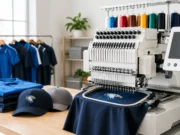


















A hospitality group reordering 300 polo shirts, a clinic fitting new staff, and a factory standardizing PPE-facing workwear may all buy uniforms, but their production requirements are no longer the same. Uniform production trends are moving the conversation beyond unit price toward fabric performance, repeat-order control, decoration quality, digital approvals, and supplier capacity.
For procurement teams, the practical question is not whether a trend is new. It is whether it reduces rework, protects brand consistency, supports daily wear, and makes the next order easier to manage. For uniform suppliers and custom manufacturers, these changes create an opportunity to compete on production intelligence rather than on quotations alone.
Uniform production trends are becoming more operational
The strongest shift in the market is the treatment of uniforms as an operating asset. A poorly specified garment can lead to replacement costs, inconsistent staff presentation, discomfort in hot working conditions, or logo failure after repeated laundering. A well-planned custom made uniform program gives organizations a repeatable standard for staff appearance while accommodating role-specific needs.
This is especially relevant in sectors with high employee movement. Retail chains, food service operators, logistics firms, healthcare providers, schools, and property-management teams often need uniforms in staggered quantities instead of one large annual purchase. They want a supplier that can hold an approved specification, reproduce the same color and branding, and replenish sizes without restarting the development process.
That is changing the supplier conversation. Buyers increasingly ask about sample retention, fabric continuity, color standards, minimum reorder quantities, production lead times, and how artwork files are controlled. A supplier profile that clearly states these capabilities is more valuable than a catalogue that shows only finished garments.
Performance fabrics are replacing one-fabric solutions
Polycotton remains a common choice because it balances durability, cost, and ease of care. But it is no longer an automatic answer for every role. Buyers are specifying fabric according to work environment, movement, heat exposure, cleaning requirements, and the expected life of the garment.
For customer-facing teams in warm or humid settings, moisture management, breathability, and lighter fabric weight can improve comfort during long shifts. For technicians and warehouse staff, abrasion resistance, stretch panels, reinforced stress points, and darker color blocking may be more useful. Healthcare buyers may prioritize wash durability, stain release, and a finish that supports frequent laundering. Corporate office wear can place greater emphasis on drape, wrinkle resistance, and a polished appearance under daily use.
The trade-off is that higher-performance textiles can increase garment cost and create more complex sourcing. A fabric that feels excellent in a first sample may not be available for repeat orders six months later. Procurement teams should therefore assess more than fabric feel. Ask suppliers whether the textile is stocked locally, whether it has a stable mill source, and what comparable substitute will be proposed if supply changes.
Material transparency is also gaining weight. Organizations with sustainability reporting goals are looking for recycled polyester, organic cotton, lower-impact dyeing, or fabrics with recognized environmental claims. These options can support a responsible sourcing brief, but claims should be matched with documentation and practical wear testing. Sustainable content does not automatically mean a fabric is suitable for industrial laundering, high-heat decoration, or demanding field work.
Decoration choices are being planned earlier
Embroidery, screen printing, heat transfer, direct-to-film printing, and digital textile printing each serve different uniform applications. The current production trend is not simply choosing the newest method. It is bringing decoration decisions into the garment-design stage, before fabric and placement are finalized.
Embroidery continues to suit polos, woven shirts, jackets, caps, and premium corporate uniforms where texture and long-term presentation matter. Yet dense embroidery can make lightweight fabric pull, pucker, or feel uncomfortable on the chest. Screen printing remains efficient for larger quantities and bold, limited-color artwork, while digital transfer methods can be more practical for smaller runs, variable names, multicolor graphics, or rapid campaigns.
For buyers, the detail that often gets missed is decoration placement across sizes. A logo that looks balanced on a medium shirt can sit too high or too close to a seam on an extra-small or 4XL garment. Good production teams create placement standards by garment size range, then confirm them on pre-production samples.
Brand managers should also think beyond the front chest logo. Sleeve marks, back identifiers, department names, reflective elements, and personalized name labels can add operational value. The right mix depends on the setting. A hotel may need quiet, refined branding; a security team may need instant recognition; a delivery fleet may need highly visible logos and reflective treatments.
Digital sampling and smarter approvals reduce avoidable waste
Physical samples are still essential for fit, hand feel, construction, and decoration testing. However, digital tools are improving the steps that happen before a sample reaches the buyer. Digital mockups, standardized artwork templates, virtual color references, and online approval records help organizations align marketing, HR, operations, and purchasing teams before production begins.
AI-enabled planning tools are also starting to support demand forecasting, size allocation, and production scheduling. Their value is most practical when an organization has order history. A multi-site operator can analyze past issues by location, job role, or season, then adjust stock levels and size ratios for the next rollout.
Technology does not remove the need for a human approval process. Screens display color differently, and a digital garment rendering cannot confirm shrinkage, seam strength, or opacity. The best workflow combines digital speed with physical checkpoints: approve the artwork, inspect the size set, test the decoration, and sign off on a production sample before bulk cutting starts.
Fit inclusivity is becoming a procurement requirement
Uniform programs have often been built around a narrow size curve and a unisex pattern that fits few people particularly well. That approach can create presentation problems and staff dissatisfaction, especially for public-facing organizations.
More buyers now request expanded size ranges, separate men’s and women’s fits, modesty-friendly options, maternity considerations, and job-specific cuts. This does not require every organization to create dozens of styles. It does require an early decision about who will wear the garment and how it must perform.
A practical program might use a shared fabric and color palette across several silhouettes, such as a men’s shirt, women’s blouse, polo, overshirt, hijab-compatible option, and outer layer. The visual identity remains consistent while employees have garments that work for their role and body type.
Accurate measurement is central to this trend. Suppliers that offer size charts alone may be sufficient for a small, low-risk order. For larger deployments, fit sessions, measurement support, sample size kits, and clear exchange procedures can prevent costly remakes. Buyers should clarify whether alterations are available and whether altered garments can be reordered to the same specification.
Nearer production and reorder readiness matter more
Global sourcing can offer price advantages, particularly for large quantities and specialized fabrics. But longer supply chains create exposure to freight delays, communication gaps, changing minimums, and difficult quality resolution. As a result, many organizations are balancing offshore production with regional or local manufacturing partners for sampling, urgent top-ups, and controlled repeat orders.
This does not mean local production is always the best option. It depends on order volume, complexity, required delivery date, and textile availability. A basic promotional T-shirt in a high volume may be well suited to a long-run factory model. A branded uniform program requiring multiple sizes, embroidery, phased delivery, and ongoing replenishment may benefit from closer production oversight.
For Malaysian buyers, supplier selection should include the full chain: fabric sourcing, pattern making, cutting, sewing, printing or embroidery, finishing, packing, and delivery. Some vendors manage every stage in-house; others coordinate specialist partners. Either model can work if responsibilities, quality checks, and lead times are clearly defined.
What buyers should ask before placing a uniform order
Current uniform production trends reward buyers who specify clearly rather than buyers who simply request a quote. Before comparing suppliers, establish the garment’s role, expected wear conditions, budget range, branding method, size requirements, and reorder plan.
Ask for a detailed quotation that separates garment cost, fabric specification, decoration setup, per-piece decoration, sampling, packing, delivery, and applicable taxes. Confirm the production timeline from artwork approval to dispatch, not just the estimated delivery date. Also ask how defects, size shortages, color variation, and late additions are handled.
For larger or recurring programs, request a written specification sheet. It should record fabric composition and weight, approved color references, garment construction details, logo dimensions, thread or ink colors, label requirements, size chart, packaging method, and quality tolerance. This document becomes the safeguard for future orders, even if the staff members who approved the original program change.
Uniform Catalogue helps buyers compare the supplier and production capabilities behind the garments, from manufacturer profiles to embroidery and printing specialists. The most productive sourcing decision is usually not the cheapest first quotation. It is the supplier relationship that can keep every reorder consistent, usable, and on-brand when the business needs it most.