






















A hospitality group opens a new outlet, a clinic hires 18 staff members, or a logistics company updates its safety policy. The uniform requirement may be relatively small, but it cannot look small. Colors need to match, logos must reproduce cleanly, sizing must be available, and the next reorder should not become a fresh sourcing exercise. That is where on demand manufacturing can give buyers a more practical alternative to holding large volumes of finished stock.
For uniform procurement, the model is not simply about making garments one at a time. It is about building an approved, repeatable uniform program that can be produced in response to real hiring, replacement, seasonal, or location-based demand. When the production setup is right, businesses can protect brand consistency while carrying less inventory and making fewer costly guesses about staff requirements.
What On Demand Manufacturing Means for Uniform Buyers
On demand manufacturing is a production approach in which goods are made after an order, approved release, or replenishment trigger is received. In the uniform sector, this usually means a supplier retains the production specifications rather than the buyer holding every finished shirt, jacket, apron, or pair of trousers in a storeroom.
Those specifications can include approved artwork, logo placement, thread colors, print files, fabric references, garment patterns, size charts, trims, packaging instructions, and quality standards. A buyer may establish the core collection in advance, then call off quantities as staff needs change.
This differs from a conventional bulk order, where an organization forecasts demand for six, 12, or 24 months and takes delivery of all units at once. Bulk production can still be the better commercial choice for a stable workforce and a proven design. On-demand production becomes more attractive when headcount fluctuates, locations are expanding, employee turnover is high, or each team needs a different mix of sizes and job-specific garments.
Why Uniform Programs Are Well Suited to Demand-Led Production
Uniforms are business assets, but they also have a predictable problem: their demand is uneven. A company may need 300 polo shirts before a national campaign, then only 10 replacement shirts each month. A school may place a major order before term starts but require a steady flow of late enrollments and replacement pieces afterward. Holding enough inventory for every possible scenario can tie up cash, consume storage space, and leave organizations with obsolete branding after a role, logo, or policy changes.
An on-demand model can reduce this exposure by separating the initial development work from ongoing production. The buyer invests time up front to finalize the garment, fit, branding method, and approvals. Once the specification is locked, later orders can be faster and more controlled than starting from a blank brief each time.
For multi-site operations, this can also improve governance. Instead of each branch ordering whatever is available locally, the head office can authorize a central uniform range and define who may place replenishment orders. That matters for retail, food service, security, healthcare, facilities management, and franchise networks, where a consistent staff appearance supports customer trust.
The Real Trade-Off: Flexibility Versus Unit Cost
On demand manufacturing is not automatically cheaper. Smaller production runs often carry a higher unit cost because fabric purchasing, cutting, setup, embroidery digitizing, screen preparation, quality inspection, and packing are spread across fewer garments. Digital printing may make short-run graphic apparel more viable, while embroidery remains highly effective for durable logos but can add significant cost on low quantities.
Buyers should therefore compare total program cost, not just the price on a single shirt. A lower bulk price can lose its advantage if 15 percent of the order remains unused, if several size ranges run out early, or if rebranding turns finished inventory into dead stock. Conversely, a high-volume annual order may be sensible when designs are unlikely to change and the supplier can provide reliable size forecasting.
The most effective arrangement is often a hybrid. Core items with steady demand, such as standard corporate polos or industrial work trousers, can be ordered in planned bulk quantities. Variable items, including manager shirts, maternity options, new-hire packs, event apparel, or specialized outerwear, can be produced in shorter scheduled runs or on demand.
How to Set Up an On Demand Manufacturing Program
The program succeeds or fails during the setup stage. Before production is released, the buyer and uniform supplier need a documented specification that removes room for interpretation. A verbal description such as “navy polo with our logo” is not enough for a repeatable supply program.
Start with a controlled master sample
Approve a physical master sample for every key garment. This sample should confirm fabric weight and composition, color standard, fit, collar construction, stitching, decoration placement, and finishing details. If the uniform includes performance requirements, record them clearly: moisture management, stretch, flame resistance, antimicrobial treatment, high-visibility elements, or industrial wash durability.
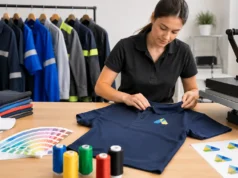
The supplier should retain the approved reference, while the buyer keeps a matching record. For branded colors, identify whether Pantone references, thread charts, or fabric swatches will be used. Screen colors can vary across materials, and a logo that looks correct on a digital proof may not look identical when embroidered onto textured fabric.
Define the reorder rules before the first delivery
A useful on-demand arrangement needs operating rules, not just a product catalogue. Agree on minimum order quantities, lead times, payment terms, size exchanges, artwork revision procedures, and the point at which a new production batch requires buyer approval.
It is also worth defining how long the supplier will retain patterns, embroidery files, screens, fabric reservations, or digital artwork. A supplier may be able to reproduce a garment for years, but only if the base fabric and trims remain available. Where a material is likely to be discontinued, ask whether equivalent substitutions require a fresh sample approval.
Match decoration to the reorder pattern
Decoration technology changes the economics of replenishment. Embroidery offers strong durability and a premium appearance for polos, caps, jackets, and corporate shirts, especially for smaller logos. Heat transfers and digital transfers can work well for variable names, numbers, campaign graphics, and short runs. Screen printing may offer excellent value for larger orders, but it usually involves setup costs that make very small replenishments less attractive.
There is no universal best method. The right choice depends on logo complexity, garment fabric, washing conditions, order frequency, and the visual standard expected by the organization.
Supplier Capabilities Buyers Should Verify
Not every custom uniform manufacturer is structured for demand-led orders. Some are optimized for large factory runs, while others specialize in quick-turn decoration but may have limited garment-development capability. Buyers should look beyond a supplier’s product photos and assess whether its operating process supports consistency over time.
Ask how production files are stored, who approves artwork changes, whether each repeat order is checked against a master sample, and how the supplier manages color variation between batches. For garments involving multiple components, ask whether all materials are sourced consistently and what happens if a particular fabric, zipper, button, or reflective trim is unavailable.
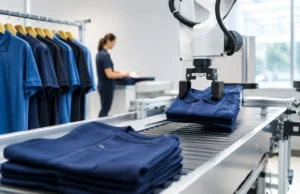
Service capacity matters as much as machinery. A supplier with embroidery machines, digital printers, cutting capability, and a clear order-management system may be better positioned to handle frequent replenishment than one relying on informal records. Manufacturer profiles and buyer guides for selecting uniform suppliers can help procurement teams compare these capabilities before committing to a program.
Where the Model Can Fall Short
On-demand production is less suitable when the required lead time is shorter than the supplier can realistically support. A new employee may need a uniform tomorrow, but custom cut-and-sew production, embroidery, or printing may take days or weeks depending on materials and order volume. Businesses with urgent operational needs may still need a small emergency stock of common sizes and core garments.
Color continuity can also be a challenge across long periods. Dye lots vary, fabrics change, and imported materials may face supply delays. The solution is not to avoid on-demand manufacturing altogether, but to specify acceptable tolerances and keep communication active when substitutions become necessary.
Finally, demand-led production does not remove the need for forecasting. It changes the forecast from a large annual gamble into a series of smaller decisions. Buyers still need visibility into hiring plans, seasonal peaks, and upcoming brand changes so suppliers can reserve capacity and materials where needed.
For organizations building a more responsive uniform program, the most useful next step is to map which garments are stable, which are variable, and which have been repeatedly overordered. That simple review often reveals where on-demand production can protect cash, reduce waste, and keep every new staff member looking like part of the same brand from day one.