

















A scrub set can look acceptable on a fitting day and still fail halfway through a 12-hour shift. Pockets pull open, fabric traps heat, pants slide at the waist, and colors fade into an inconsistent mix after repeated commercial laundering. The best medical scrub features are the ones that protect staff comfort and professional presentation under real clinical pressure – not simply the features that look good in a product photo.
For healthcare administrators, clinic operators, and procurement teams, scrubs are an operational purchase. They affect employee readiness, infection-control practices, replacement cycles, patient perception, and the consistency of a healthcare brand across departments. The right specification starts with how each team works, then balances performance requirements with budget and supplier capability.
Best Medical Scrub Features to Prioritize
Fabric that manages long shifts
Fabric composition is the first purchasing decision because it determines comfort, durability, care requirements, and cost. Polyester-cotton blends remain common for good reason. They are durable, resist wrinkling better than pure cotton, retain color well, and are generally practical for large-scale uniform programs. A higher polyester content can improve shape retention and drying time, while more cotton often brings a softer, more breathable hand feel.
That does not mean one blend fits every workplace. Staff in warm settings or roles involving frequent movement may prefer lighter-weight fabric with moisture-wicking performance. Emergency, ward, and outpatient teams can benefit from stretch fibers such as spandex or elastane, especially in areas where bending, reaching, and lifting are routine. Even a small amount of mechanical or four-way stretch can make a noticeable difference in mobility.
Procurement teams should ask for fabric weight, composition, shrinkage expectations, colorfastness information, and washing guidance rather than relying on descriptions such as “premium” or “soft.” A fabric that feels comfortable initially but thins quickly after industrial washing creates higher replacement costs. Conversely, a heavy fabric may last well but become uncomfortable in hot, humid work areas. Sample testing after several wash cycles is more useful than a single fitting-room assessment.
Reliable fit and practical mobility
Scrub sizing is not a minor detail. Poorly fitted uniforms can restrict movement, look untidy, and make employees less likely to follow a uniform policy consistently. A supplier should provide a clear size chart with garment measurements, not only generic labels such as small, medium, or large. For larger deployments, fit samples across key sizes and body types should be reviewed before bulk production begins.
Useful design details include side vents on scrub tops, articulated or roomier knee construction on pants, elasticized waist sections, adjustable drawstrings, and rise options that suit the wearer’s role. A tapered silhouette may look more contemporary, but it should not come at the expense of crouching, transferring patients, or moving quickly between treatment rooms.
There is also a commercial trade-off. Offering multiple fits – such as unisex, women’s tailored, and men’s styles – improves staff acceptance but increases stock-keeping complexity. A smaller clinic may choose a well-designed unisex range with adjustable features. A hospital group with diverse teams and a longer uniform lifecycle may justify multiple cuts because better fit can reduce alteration requests and unused inventory.
Pockets designed around actual tasks
Pocket count alone is not a quality measure. The question is whether pocket placement supports the equipment and workflow of the wearer. Nurses may need secure space for pens, phones, notepads, scissors, alcohol wipes, or small diagnostic tools. Laboratory personnel may prefer a cleaner, less bulky profile. Front-desk clinical staff may need fewer utility pockets but benefit from a polished, structured appearance.
Deep front pockets, reinforced pocket openings, pen slots, and discreet phone compartments are often worthwhile. Cargo pockets can be useful for mobile care teams, but oversized pockets may catch on equipment or create a less formal look in patient-facing settings. Test pockets with the items staff actually carry. A phone pocket that is too shallow, or a pen pocket positioned under a lanyard, quickly becomes a daily annoyance.
Construction built for repeat laundering
Medical scrubs are washed frequently, and construction quality becomes obvious over time. Examine stitching at inseams, crotch seams, pockets, waistband joins, and shoulder areas. Reinforced stress points and consistent seam finishing help prevent early failures. Double stitching can add strength in high-stress zones, although it should be applied thoughtfully so seams do not feel bulky against the skin.
Buttons, snaps, zippers, drawcords, and elastic should also be evaluated as part of the garment system. A drawstring may provide a better fit, but it can twist or pull out if poorly finished. Elastic that loses recovery after repeated laundering turns a functional pant into a replacement item. For bulk orders, request pre-production samples and define acceptable quality standards before the supplier starts the full run.
Colors that support clinical identity and laundering
Color serves both operational and branding functions. Department-based color coding can help patients and colleagues identify roles, especially in large healthcare facilities. It can also simplify uniform issue and create a clearer visual hierarchy among nursing, pharmacy, dental, laboratory, reception, and support teams.
However, color coding should not become so complicated that it causes purchasing and replenishment problems. Select shades that can be reproduced consistently by the uniform manufacturer and that remain stable across repeat orders. Navy, ceil blue, charcoal, wine, and dark green are common practical choices because they present well and can mask minor marks between routine checks. Lighter colors may support a clean visual identity but require closer attention to opacity, stain visibility, and wash results.
Ask suppliers whether the chosen fabric and dye process have been tested for colorfastness. Matching a brand color exactly may be possible for a custom made uniform program, but a highly specific shade can create minimum-order requirements and longer lead times. For many organizations, choosing a close standard color and reserving exact brand matching for embroidery or printed elements is a more cost-controlled approach.
Hygiene Features Need Clear Claims
Antimicrobial and fluid-resistant finishes are increasingly requested in healthcare apparel, but buyers should evaluate these claims carefully. A finish can be useful for particular environments, yet it is not a substitute for hand hygiene, PPE protocols, infection-control procedures, or proper laundering.
If a supplier offers antimicrobial treatment, ask what technology is used, how long the treatment is expected to last, and whether its performance changes after a stated number of washes. For fluid resistance, clarify whether the garment is designed for minor splash resistance or whether staff need certified protective apparel for higher-risk tasks. The latter is a different product category with different standards and purchasing considerations.
Breathability matters here too. Some coatings can make fabric feel less breathable, particularly in warm facilities or high-movement roles. The strongest specification is not always the best one if staff find it uncomfortable enough to avoid wearing it correctly.
Branding Without Compromising Performance
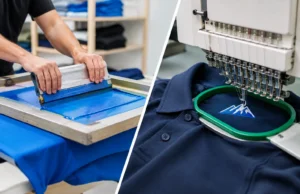
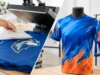
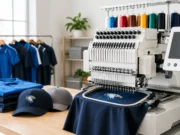
A well-executed logo turns standard scrubs into a recognizable staff uniform, but decoration methods should suit the fabric and the job. Embroidery provides a durable, premium finish for chest logos and names, though dense stitching can feel stiff on lightweight material. Heat-applied transfers can produce fine detail and multicolor marks, but the supplier should confirm wash durability and suitable application settings for the selected fabric.
Placement deserves as much attention as the logo itself. A left-chest logo is familiar and professional, while sleeve branding can be visible without interfering with pockets. Large back prints can support team identification for community events or outreach programs, but are less appropriate where a clean clinical appearance is the priority. Avoid decoration that creates excess weight, irritation, or a surface that complicates care and laundering.
For multi-site healthcare groups, approve a decoration guide covering logo size, thread or print colors, position, staff-name format, and department variations. This gives future orders a consistent reference and reduces the risk of each location interpreting the brand differently.
How Buyers Should Compare Scrub Suppliers
The best product specification still depends on the supplier’s ability to deliver it reliably. Compare medical scrub suppliers on sample quality, fabric sourcing transparency, size range, customization capability, minimum order quantity, lead time, and reordering support. A low initial unit price can become expensive if the supplier cannot reproduce the same fabric, color, or logo placement six months later.
For a pilot order, involve the people who will wear the garments. Ask representatives from nursing, clinical support, administration, and facilities teams to assess comfort, pocket utility, opacity, movement, and post-wash appearance. Their feedback is practical product data, not a cosmetic preference.
It also helps to plan uniform supply in phases. Core staff may need an initial issue of several sets, while new-hire stock and replacement stock should be forecast separately. This avoids rushing small repeat orders, which often cost more and offer fewer customization choices. Supplier profiles and manufacturer catalogues can help buyers identify partners with the appropriate production scale, decoration services, and textile expertise for a long-term program.
A strong scrub program gives staff clothing that works as hard as they do. Before placing a bulk order, wear-test the sample, wash-test the fabric, and make sure the supplier can repeat the result when the next department, location, or hiring cycle needs uniforms.