
















Winter Uniform Jacket: 7 Best Factors
Choosing the right winter uniform jacket is one of the most practical decisions any organisation makes for its team. Whether your staff work outdoors, greet guests at an entrance, or move between indoor and outdoor spaces, the jacket they wear shapes comfort, professionalism, and performance. Get it wrong and you end up with cold, uncomfortable workers and a poor brand impression. Get it right and you gain a uniform solution that truly works. Here are the 7 best factors to guide your decision.
- Factor 1: Insulation Type and Warmth Rating
- Factor 2: Outer Shell Fabric and Weather Resistance
- Factor 3: Fit, Cut, and Freedom of Movement
- Factor 4: Branding and Customisation Options
- Factor 5: Durability and Care Requirements
- Factor 6: Staff Jacket Insulation for Different Roles
- Factor 7: Workplace Winter Coat Standards and Compliance
- Frequently Asked Questions
- Final Thoughts
Factor 1: Insulation Type and Warmth Rating for Your Winter Uniform Jacket
Insulation is the heart of any winter uniform jacket. The right fill keeps your staff warm without making them bulky or restricted. There are three main insulation types to understand: down fill, synthetic fill, and fleece lining. Each has its strengths depending on working conditions.
Down insulation offers an excellent warmth-to-weight ratio. It compresses well and feels light, but it loses effectiveness when wet. This makes it less suitable for outdoor roles where rain is a regular factor.
Synthetic insulation performs better in damp environments. It retains warmth even when moist, dries faster, and is generally easier to care for. It tends to be heavier than down but is a smarter choice for most uniform applications.
Fleece lining suits milder cold conditions or layering systems. A fleece-lined shell works well for hospitality staff who move between warm indoor spaces and cool outdoor areas frequently throughout a shift.
- Down fill: lightweight, compressible, best for dry cold
- Synthetic fill: moisture-resistant, durable, wash-friendly
- Fleece lining: mid-layer warmth, great for transitional weather
- Heated insulation panels: emerging option for extreme cold roles
Factor 2: Outer Shell Fabric and Weather Resistance
The outer shell of a winter uniform jacket is the first line of defence against wind, rain, and cold air. Shell fabric choice directly affects how well the jacket performs in real working conditions.
Polyester shells with a durable water-repellent (DWR) coating are the most common choice for uniform outerwear. They resist light rain and wind without adding significant weight. For heavier weather exposure, a bonded or laminated shell offers superior protection.
Softshell fabrics combine a knitted outer layer with a wind-resistant membrane, delivering good stretch and breathability. They suit active roles where staff need to bend, lift, or move quickly. The trade-off is slightly less rain protection compared to hardshell alternatives.
Hardshell jackets with sealed seams and waterproof zips are the top choice for genuinely wet environments. These are common in construction, landscaping, and outdoor event management. They cost more but deliver strong long-term performance for roles that demand it.
Uniform Outerwear Warmth: Why Shell Choice Matters
Shell fabric affects more than waterproofing. It influences how well the jacket traps heat inside. A tightly woven outer layer blocks wind-chill, which is often the biggest enemy of uniform outerwear warmth in exposed working locations. Even a mid-weight jacket can feel significantly warmer if the shell is wind-resistant.
Factor 3: Fit, Cut, and Freedom of Movement
A winter uniform jacket must fit well to look professional and function properly. Uniform outerwear that is too tight restricts movement and uncomfortable to wear for long shifts. Too loose and it looks sloppy and allows cold air to circulate inside.
The best approach for most organisations is a regular fit that sits slightly relaxed through the chest and shoulders, with a hem that covers the waistband. This silhouette looks clean and allows layering underneath without looking overstuffed.
For physically active roles, an athletic or slim fit with articulated sleeves reduces fabric bulk while keeping the jacket close to the body. This design prevents the jacket from catching on equipment or riding up during movement.
- Regular fit: ideal for hospitality, retail, and reception roles
- Athletic fit: suits warehouse, delivery, and outdoor crew roles
- Oversized fit: rarely appropriate for professional uniforms
- Extended back hem: useful for staff who bend or crouch frequently
Always size jackets to accommodate a mid-layer underneath. Ordering by chest measurement alone can lead to jackets that fit well over a shirt but feel tight over a thermal layer, which undermines the entire warmth strategy.
Factor 4: Branding and Customisation Options
Your winter uniform jacket carries your brand. When staff wear it on-site, in transit, or at client locations, it communicates your organisation’s identity. This makes customisation planning as important as fabric selection.
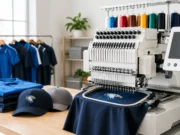
Embroidery is the most popular and durable method for adding logos to outerwear. It withstands repeated washing and outdoor exposure far better than printed alternatives. Left chest placement is standard, though sleeve and back placement work well for roles where visibility is a priority.
Heat transfer printing is another option for complex, multi-colour logos, though it may crack or peel over time on heavily washed outerwear. Screen printing is not typically suitable for thick jacket fabrics. For teams already familiar with club uniform embroidery or school blazer embroidery practices, the same guidelines around thread type and backing stability apply equally to outerwear.
Colour choice matters for branding too. Dark navy, charcoal, and black are the most professional and versatile options. High-contrast piping or trim in brand colours adds visual interest without compromising formality.
- Embroidery: most durable, suits logos with defined edges
- Heat transfer print: good for photographic or detailed graphics
- Woven patches: premium look, suits heritage brands
- Reflective branding elements: add safety value for outdoor roles
Factor 5: Durability and Care Requirements
Uniform jackets take a beating. They are worn daily, exposed to weather, and washed frequently. Durability is not a bonus feature but a baseline requirement when you are outfitting a full team.
Look for reinforced stitching at stress points like pockets, cuffs, and zip attachments. Double-stitched seams add longevity without adding cost significantly. Quality zippers from reputable makers resist jamming and corrosion even with regular exposure to moisture.
Care requirements affect the total cost of ownership. Jackets that require dry cleaning add ongoing expense and logistical burden for staff or laundry teams. Machine-washable synthetic jackets are strongly preferred for most uniform applications. Always check whether the DWR coating requires reactivation after washing, which is typically done with a low heat tumble dry cycle.
According to guidance from the Occupational Safety and Health Administration, employers have a responsibility to maintain protective and functional workwear in good condition, which makes choosing inherently durable materials a sound operational decision.
Factor 6: Staff Jacket Insulation for Different Roles
Not every staff member needs the same level of warmth. Staff jacket insulation should be matched to the specific working conditions of each role rather than applying a single solution across an entire workforce.
Outdoor workers in exposed environments such as event staff, grounds crews, or delivery drivers need maximum insulation and weatherproofing. A heavyweight synthetic fill jacket with a sealed shell is the right choice here.
Indoor staff who occasionally step outside, such as hotel concierge, retail floor supervisors, or restaurant hosts, need something lighter and more polished. A slim padded jacket with a smooth outer shell suits this group well, offering enough warmth for brief outdoor exposure without looking too heavy for an indoor setting.
Winter Uniform Jacket Layering Systems for Variable Conditions
Layering is a smart strategy when staff face variable temperatures across a single shift. A winter uniform jacket worn over a moisture-wicking base layer and a mid-layer fleece creates a system that can be adjusted by adding or removing layers as conditions change. This approach is more cost-effective than commissioning a single extremely heavy jacket for everyone, and it keeps staff comfortable across a wider temperature range. Many organisations that already manage corporate uniform branding across multiple garment types find layering systems easy to coordinate visually.
Factor 7: Workplace Winter Coat Standards and Compliance
Depending on your industry, the workplace winter coat worn by your team may need to meet specific standards. This is particularly relevant for construction, utilities, food handling, and healthcare-adjacent roles.
High-visibility requirements are common in road-adjacent or construction environments. If your existing site requires high-visibility workwear, your winter jacket must comply with the relevant national standard for reflective tape placement and fluorescent colour coverage.
Food hygiene environments typically require outerwear that is free from loose fibres, external pockets that could trap debris, and materials that do not shed easily. Healthcare settings may require antimicrobial-treated fabrics, which connects to broader discussions about antimicrobial fabric selection across uniform categories.
Beyond regulatory requirements, consider internal dress code alignment. A winter uniform jacket should match the visual standards of the rest of the uniform programme. Mismatched outerwear breaks the cohesion of an otherwise well-designed team presentation.
- Check national hi-vis standards if staff work near traffic or machinery
- Confirm food-safe fabric requirements for hospitality or catering roles
- Align jacket colour and style with existing uniform palette
- Review sector-specific personal protective equipment guidelines
- Confirm wash temperature compliance if garments are centrally laundered
Frequently Asked Questions About Winter Uniform Jacket Selection
What is the best fabric for a winter uniform jacket used outdoors?
For genuine outdoor use, a polyester shell with a durable water-repellent coating and synthetic fill insulation is the most practical combination. Synthetic fill retains warmth even when damp, which matters in unpredictable weather. The shell should be tightly woven to block wind-chill, and seams should ideally be taped or bonded to prevent water ingress during sustained rain. This combination delivers reliable performance, washes well in a machine, and holds up across a full working season without significant degradation. It is also more cost-effective than down fill options for large team orders.
How should I size winter uniform jackets for a team with varying body types?
Always size outerwear to allow room for a mid-layer beneath. Take chest measurements rather than relying on generic small, medium, large sizing, as jacket cuts vary significantly between suppliers. Offer at least one extended size range to cover all body types in your team. Some manufacturers provide both regular and tall cuts, which is valuable for teams where staff height varies widely. Run a sample fitting session before placing bulk orders to catch sizing inconsistencies early. This saves significant cost and reduces the risk of staff receiving jackets they cannot wear comfortably through a full shift.
How do I maintain branding quality on outerwear jackets washed frequently?
Embroidery is the most wash-resistant branding method for outerwear. It does not crack, fade, or peel the way printed alternatives can under repeated laundering. When commissioning embroidery, ensure the backing stabiliser is appropriate for the jacket’s outer fabric. For smooth nylon or polyester shells, a cut-away backing works better than a tear-away option. Wash jackets inside out on a gentle cycle, avoid high-heat drying, and the embroidery should remain sharp for the full service life of the jacket. For heat transfer elements, always follow the supplier’s specific washing instruction card attached to the garment.
Can a single winter uniform jacket design work for both indoor and outdoor staff?
It is possible but requires careful selection. A mid-weight softshell jacket with a light synthetic lining can bridge the gap reasonably well. It offers enough warmth for brief outdoor exposure while remaining comfortable inside a heated workspace. However, if outdoor staff are genuinely exposed for long periods, a single compromise design may leave them under-dressed for the conditions. The better approach for mixed teams is a core jacket for all staff paired with an optional insulated vest or liner for outdoor-only roles. This maintains visual uniformity while addressing the practical warmth gap between roles.
What colour choices work best for professional winter uniform jackets?
Navy, charcoal grey, and black are the most professionally versatile base colours for uniform outerwear. They resist visible soiling, photograph well for marketing materials, and pair cleanly with most standard uniform shirt and trouser colours. Accent colours in piping, zip pulls, or inner lining allow brand personality to show without compromising the formal appearance. Avoid very pale colours for outdoor or active roles where soiling is likely. If your brand palette includes a distinctive colour, consider using it as a secondary accent rather than the dominant shell colour, which keeps the jacket looking polished across varied working environments.
Final Thoughts on Choosing the Right Winter Uniform Jacket
Selecting the ideal winter uniform jacket for your team is a genuinely worthwhile investment of planning time. When you get the insulation right, choose a shell that suits your environment, match the fit to the demands of each role, and build in strong branding, the result is outerwear that serves your team well through every cold season.
The 7 factors covered here give you a solid framework. Start with working conditions and warmth needs, move through fabric and fit decisions, and finish with compliance and care requirements. That sequence keeps the focus on what matters most: a jacket that keeps your people comfortable, looks professional, and lasts long enough to justify the investment.
A winter uniform jacket done right also strengthens team morale. Staff who are properly equipped for their environment feel valued and perform better. That alone makes this one of the highest-return decisions in any uniform programme.